
MAIN GALLERY
The DC Arts Center Presents
One Thread, Many Bodies: The Thingumabob Community
January 9 - February 7, 2026
Wednesday - Sunday 2:00 PM - 7:00 PM
Opening Celebration
Friday, January 9, 2026
7:00 - 9:00 PM
Artist Talk
Saturday, January 31, 2026
3:00 - 4:00 PM
Curatorial Tour & Closing Reception
Saturday, February 7, 2026
6:00 - 8:00 PM
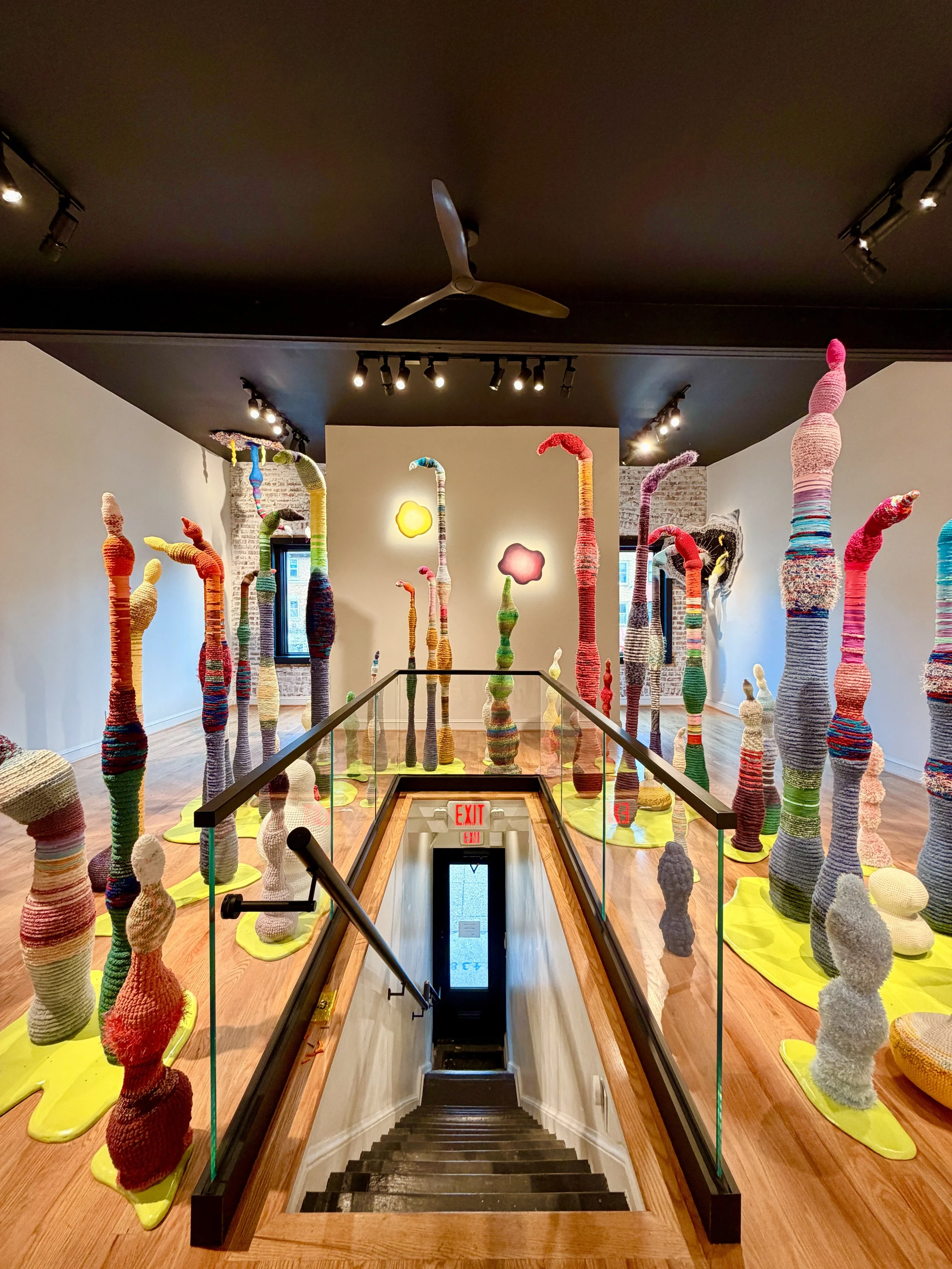
Hyunsuk Erickson
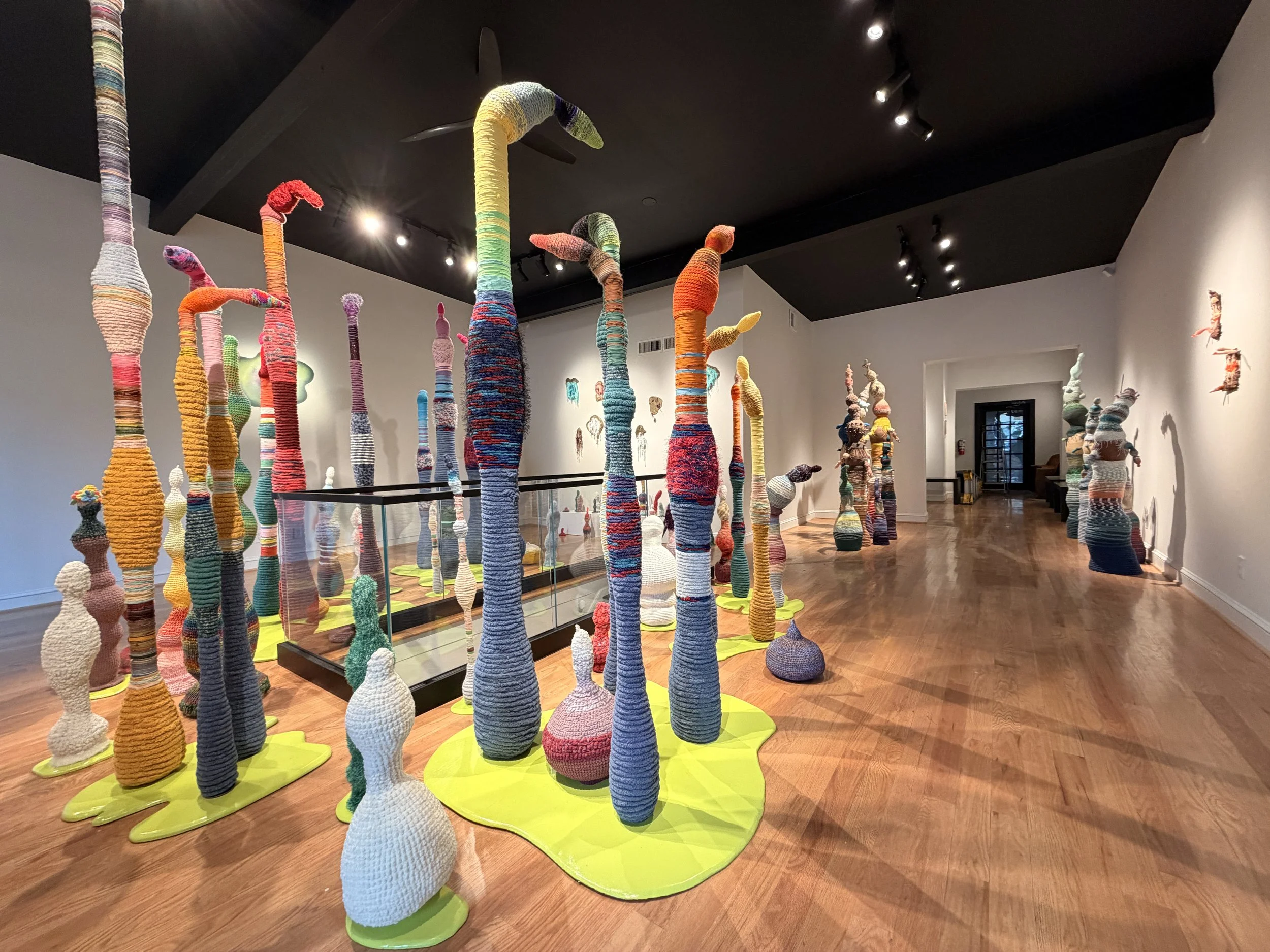
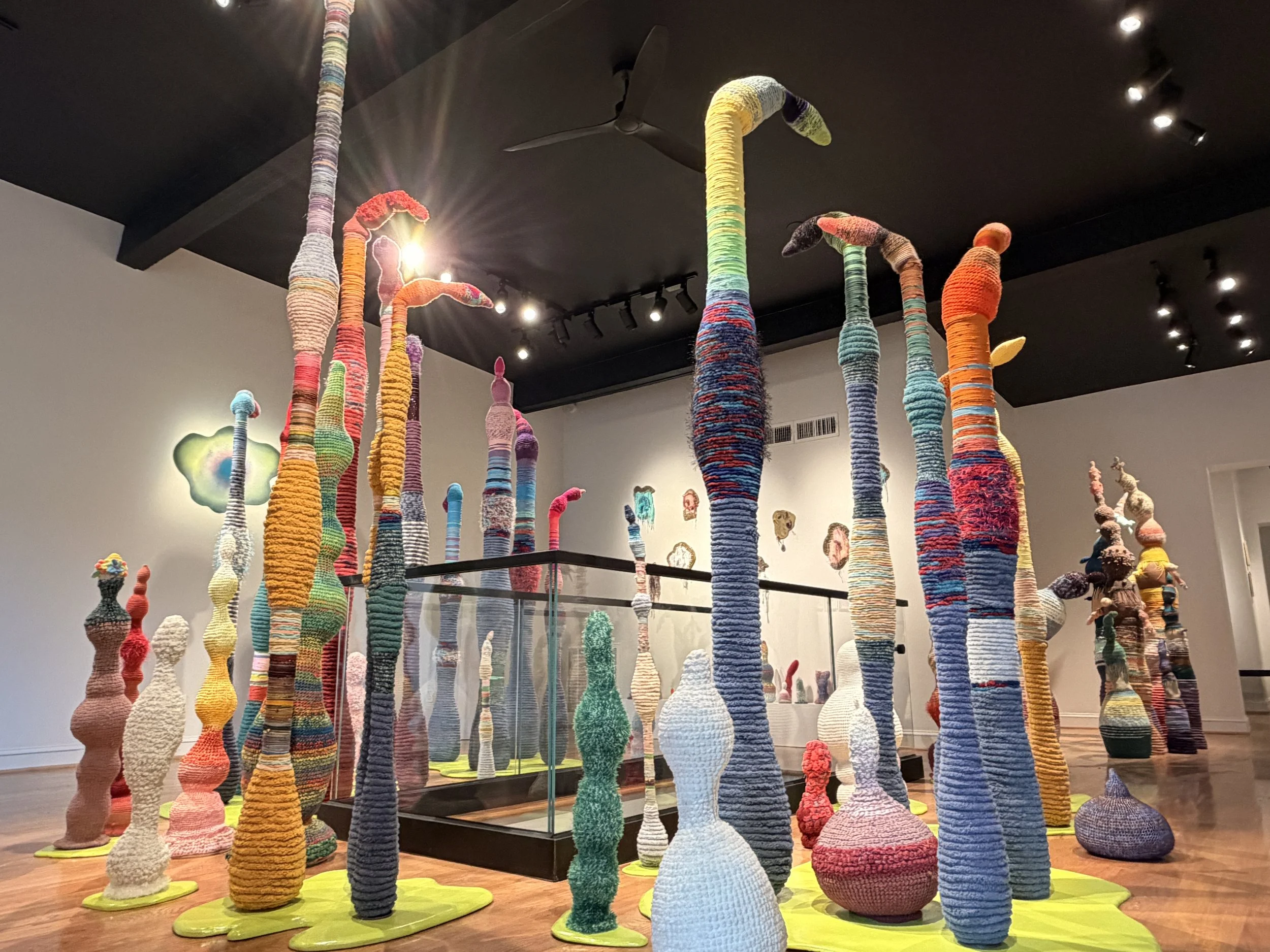
Thingumabob Society, 2025 Installation
Yarn, PVC pipe, paper roll, wood bead, poly-fill, metal pipe, and acrylic paint
Variable Dimensions
Curated by
Thu Anh Nguyen
Featured Artists
Hyunsuk Erickson
Quick Links
About the Exhibition
One Thread, Many Bodies explores the intersection of contemporary sculpture and traditional fiber arts through multicolored totems made from new and repurposed materials specifically for the space they inhabit. As a Korean-American multidisciplinary artist, Huynsuk Erickson creates art that holds and melds multiple identities, revealing the tensions between adaptation and resistance.
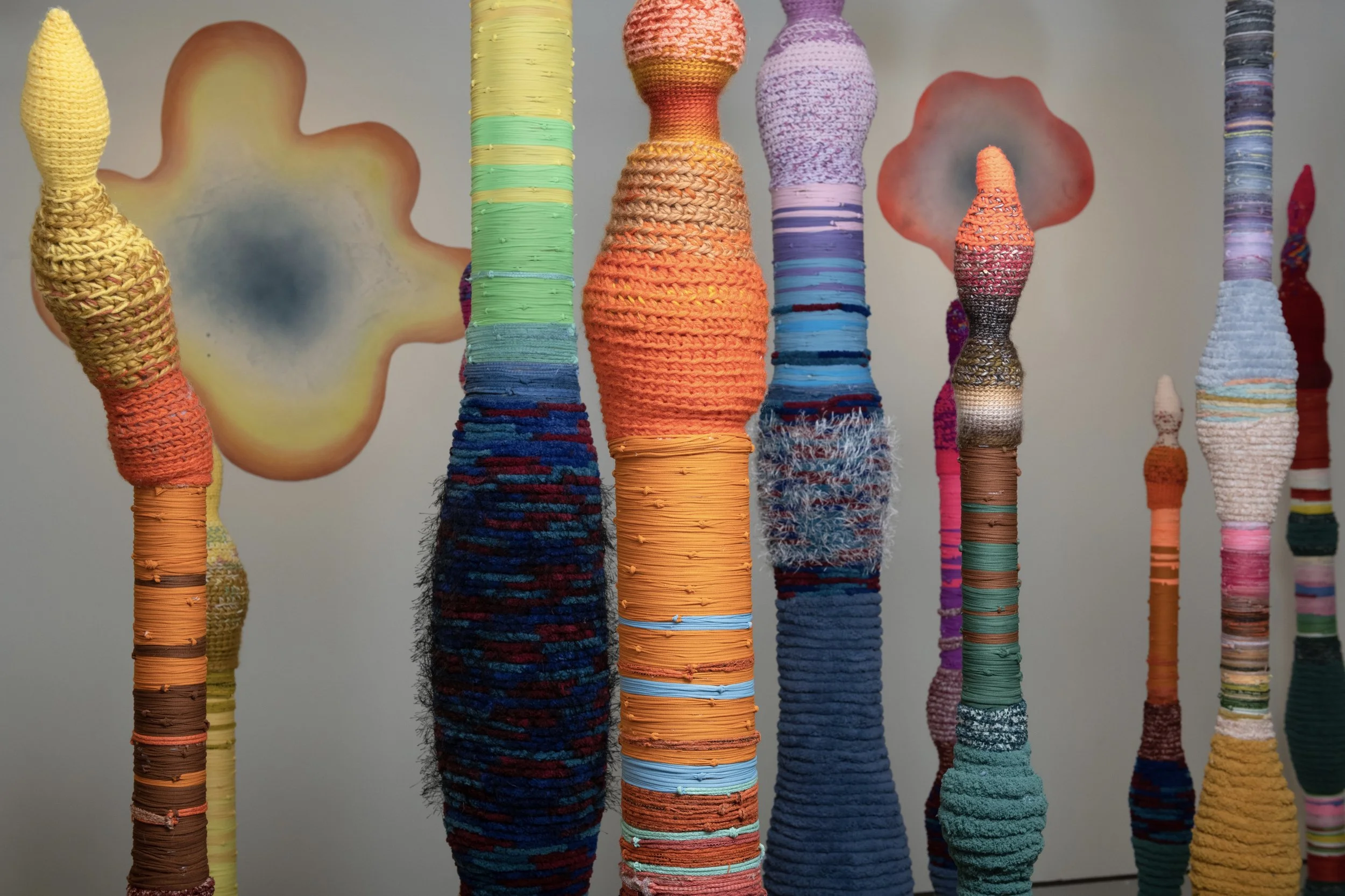
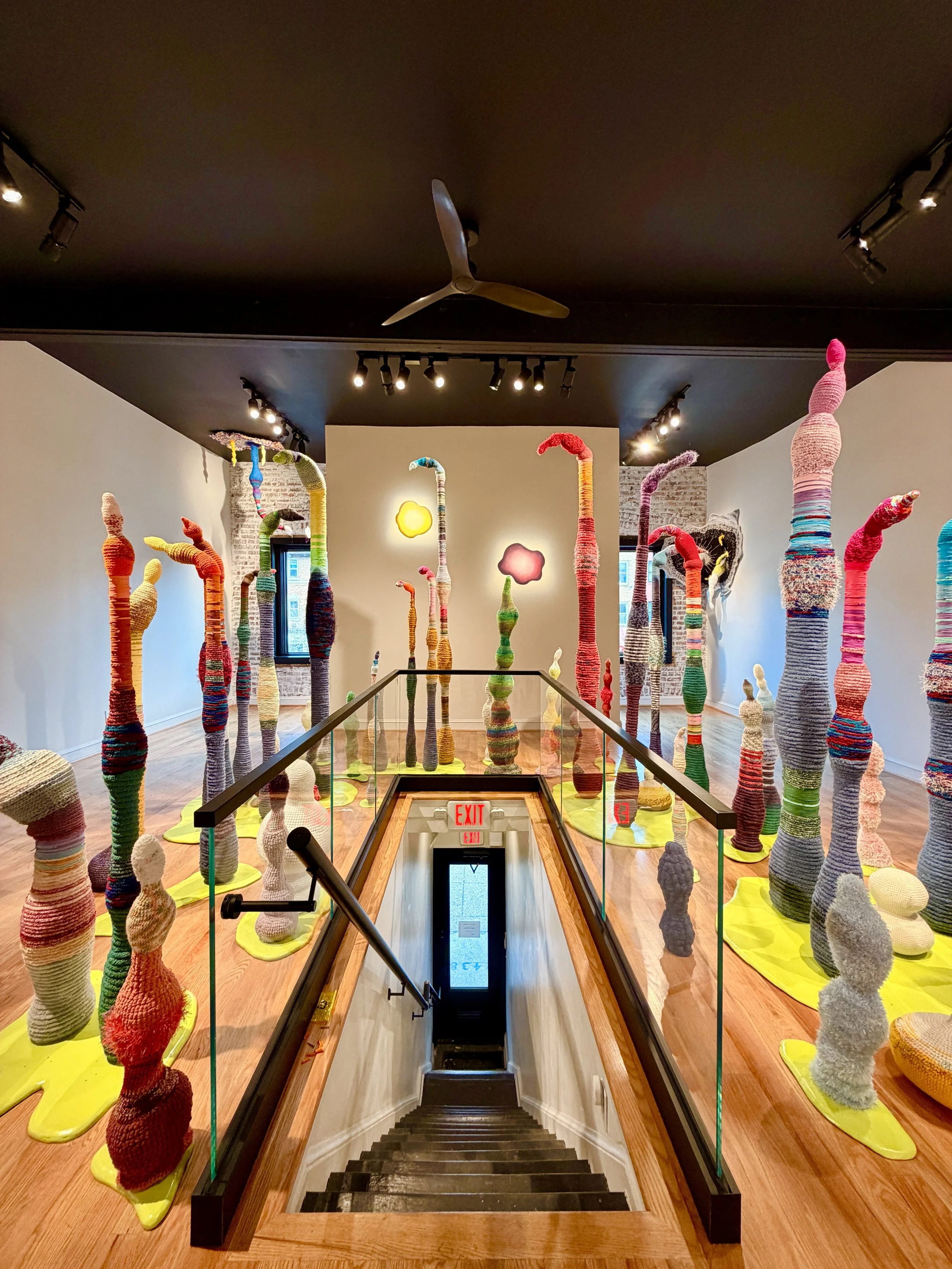
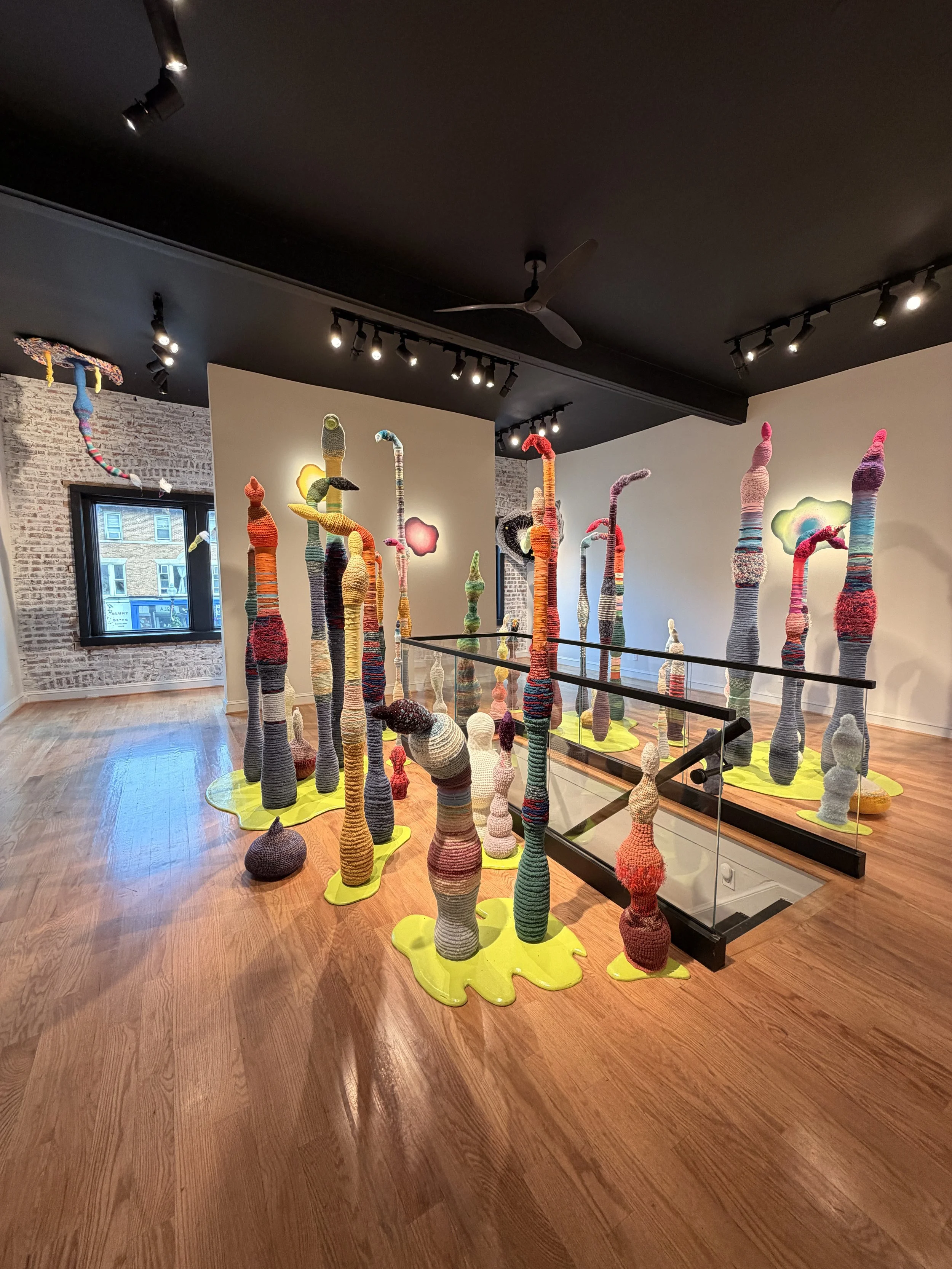
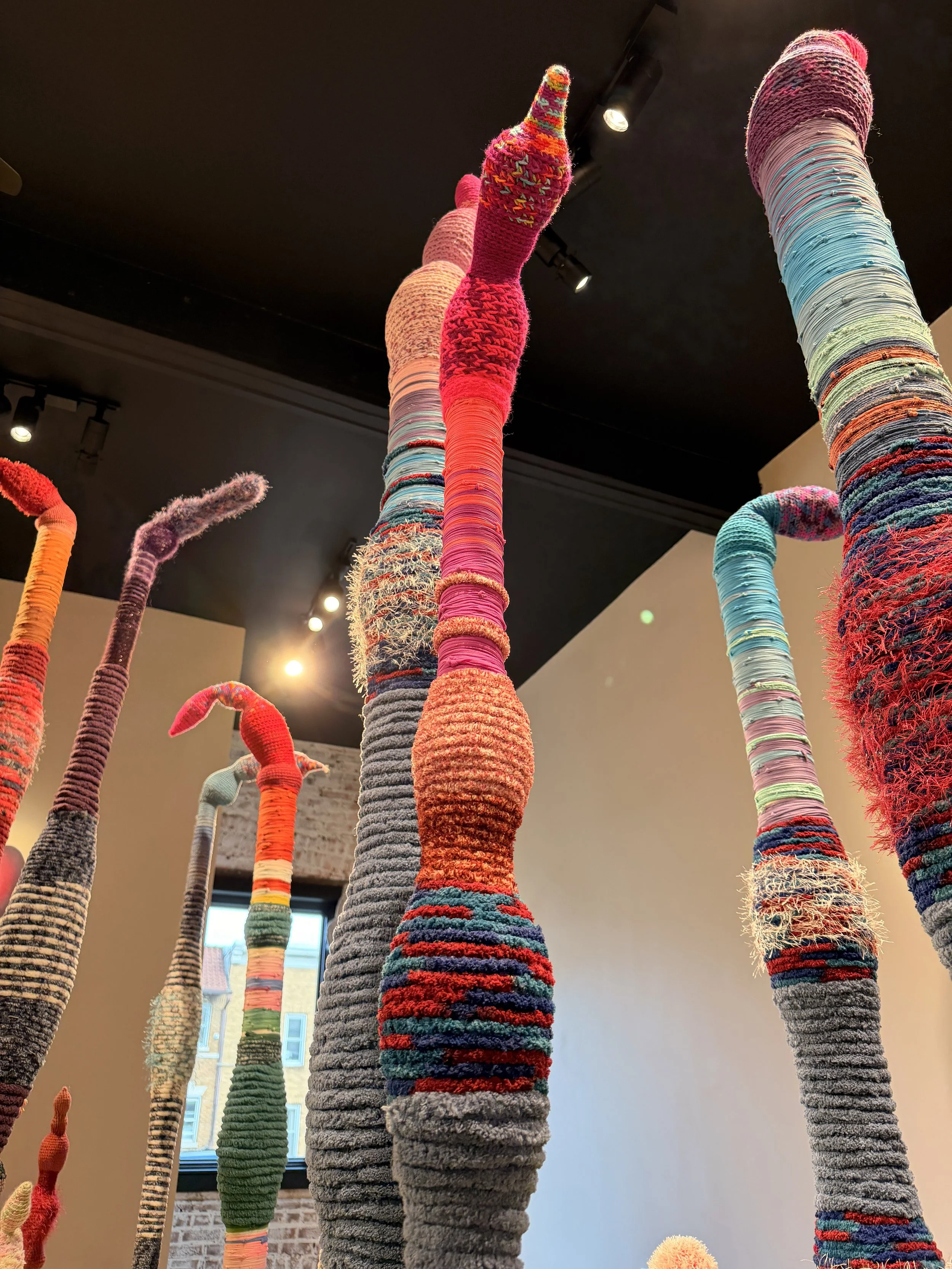
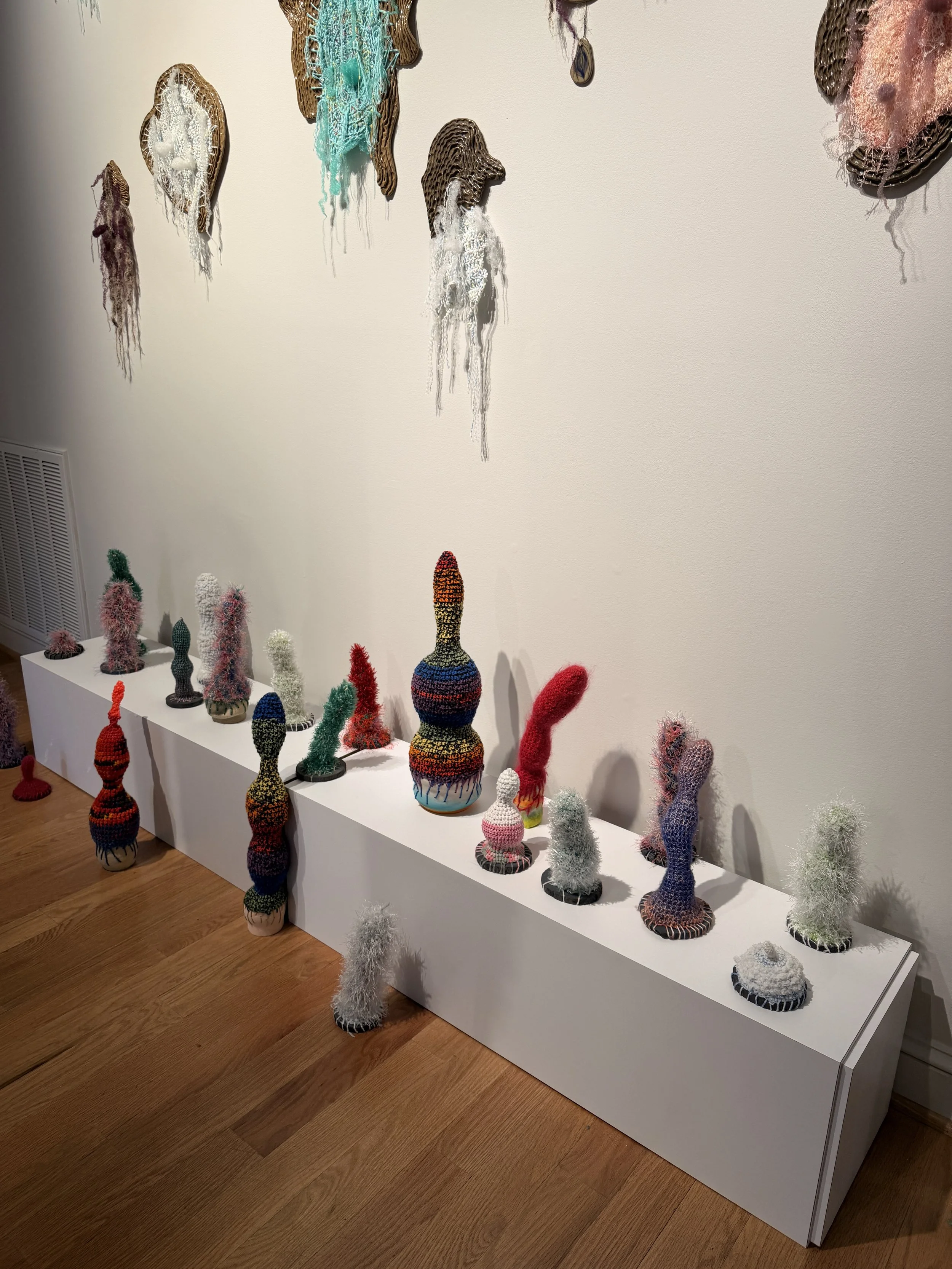
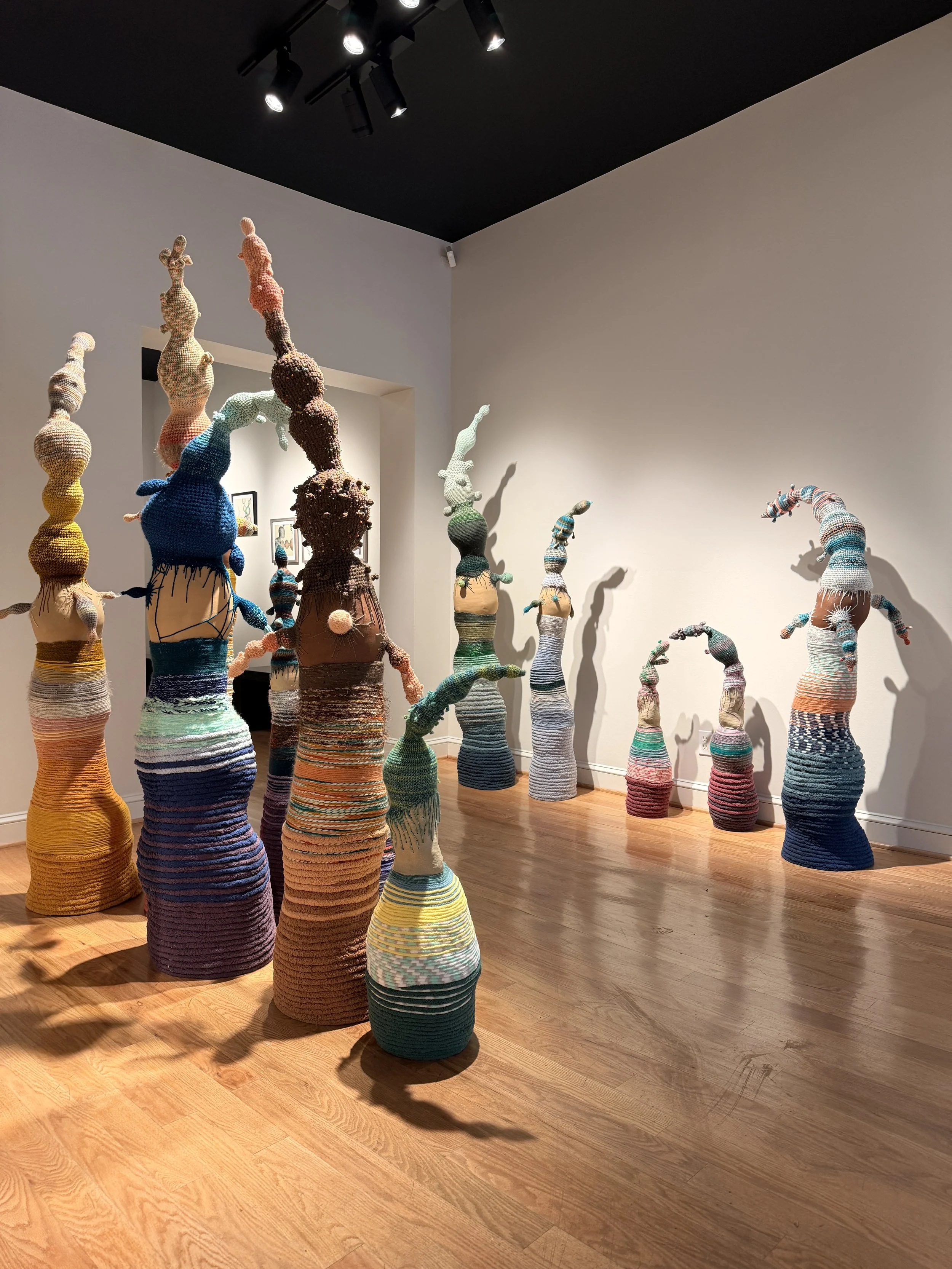
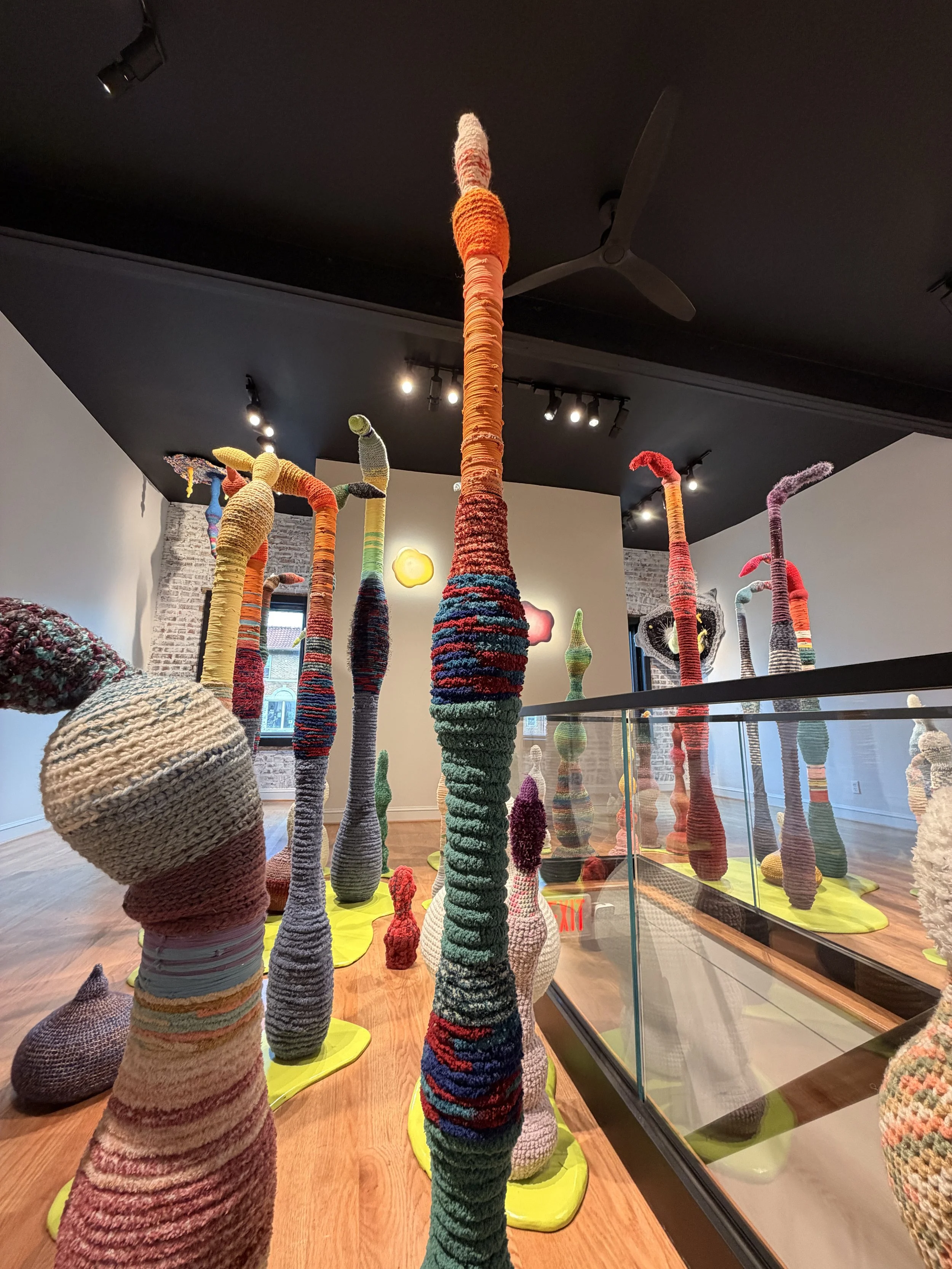
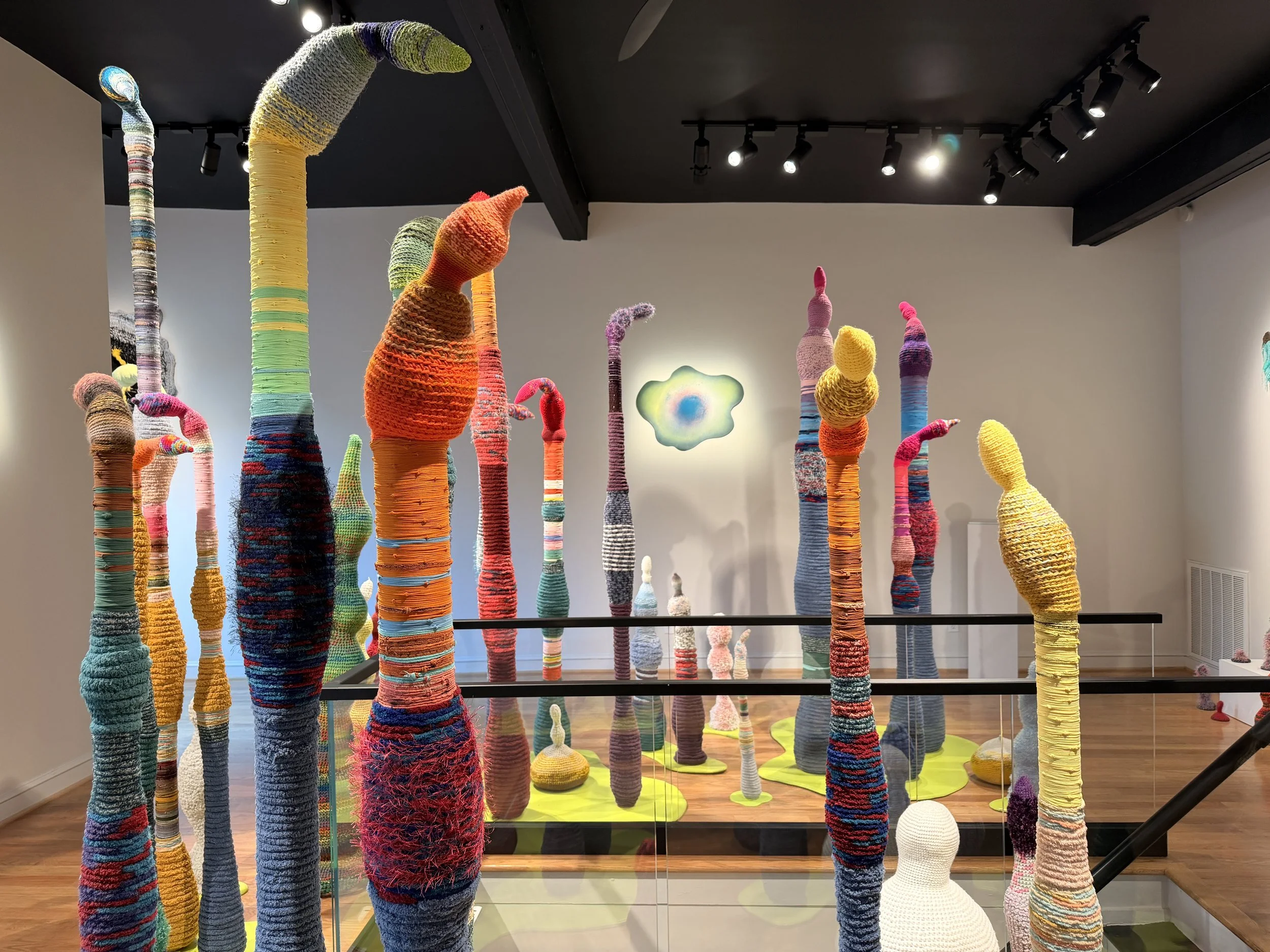
Beginning with organic column-like structures, Erickson encases hard materials such as ceramic, wood, and PVC pipe objects within intricately embroidered and crocheted outer layers. These standing forms, which she calls “Thingumabob,” merge crochet and natural clay with vibrant synthetic materials, embodying a dialogue between heritage and modernity. Erickson uses Korean craftsmanship and philosophical ideas to respond to American materialism with repurposed items. The exhibit echoes the challenges of consumerism in a changing climate that calls for environmental sustainability, represented by the Thingumabob’s birth from the discomfort.
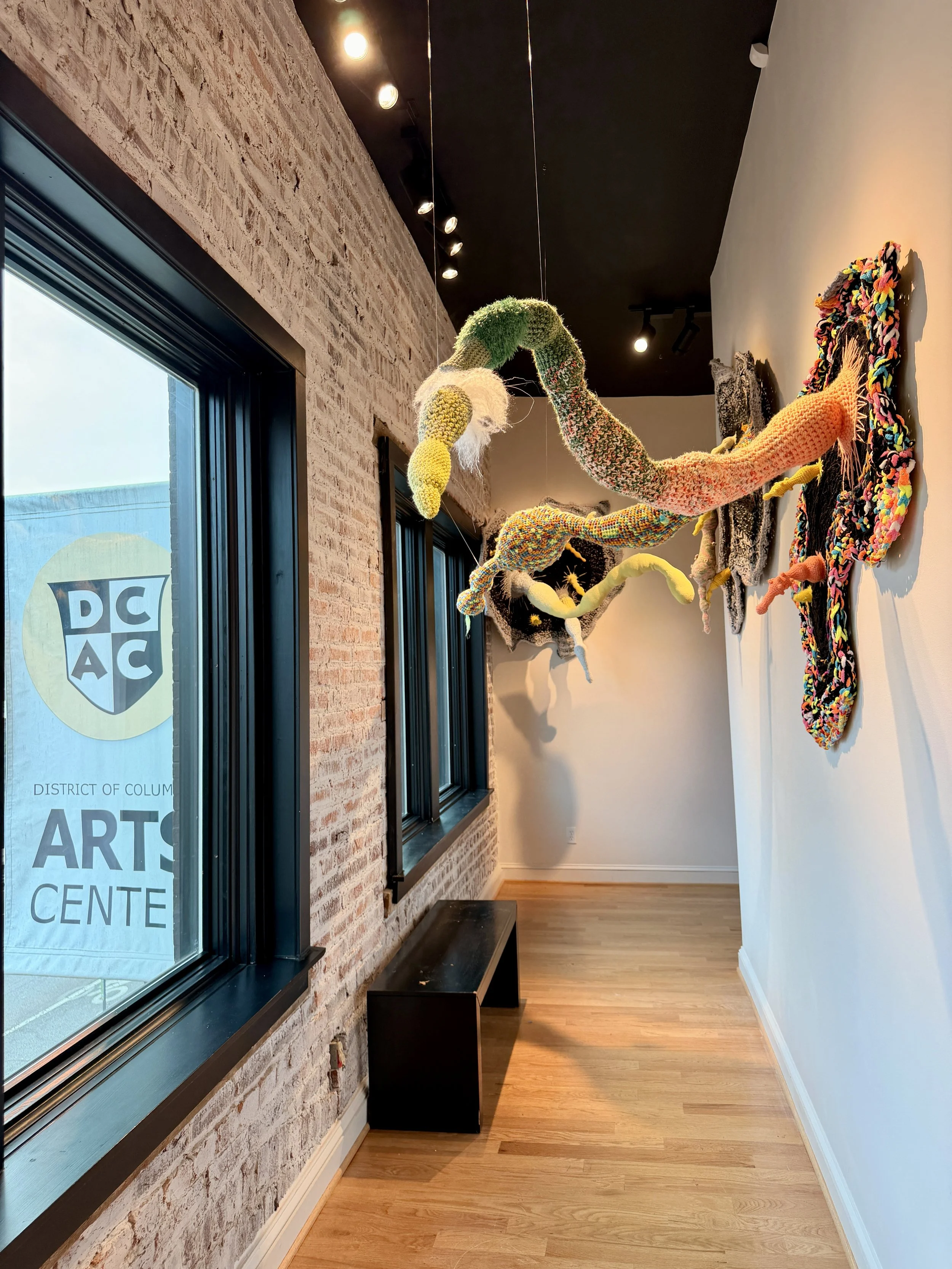
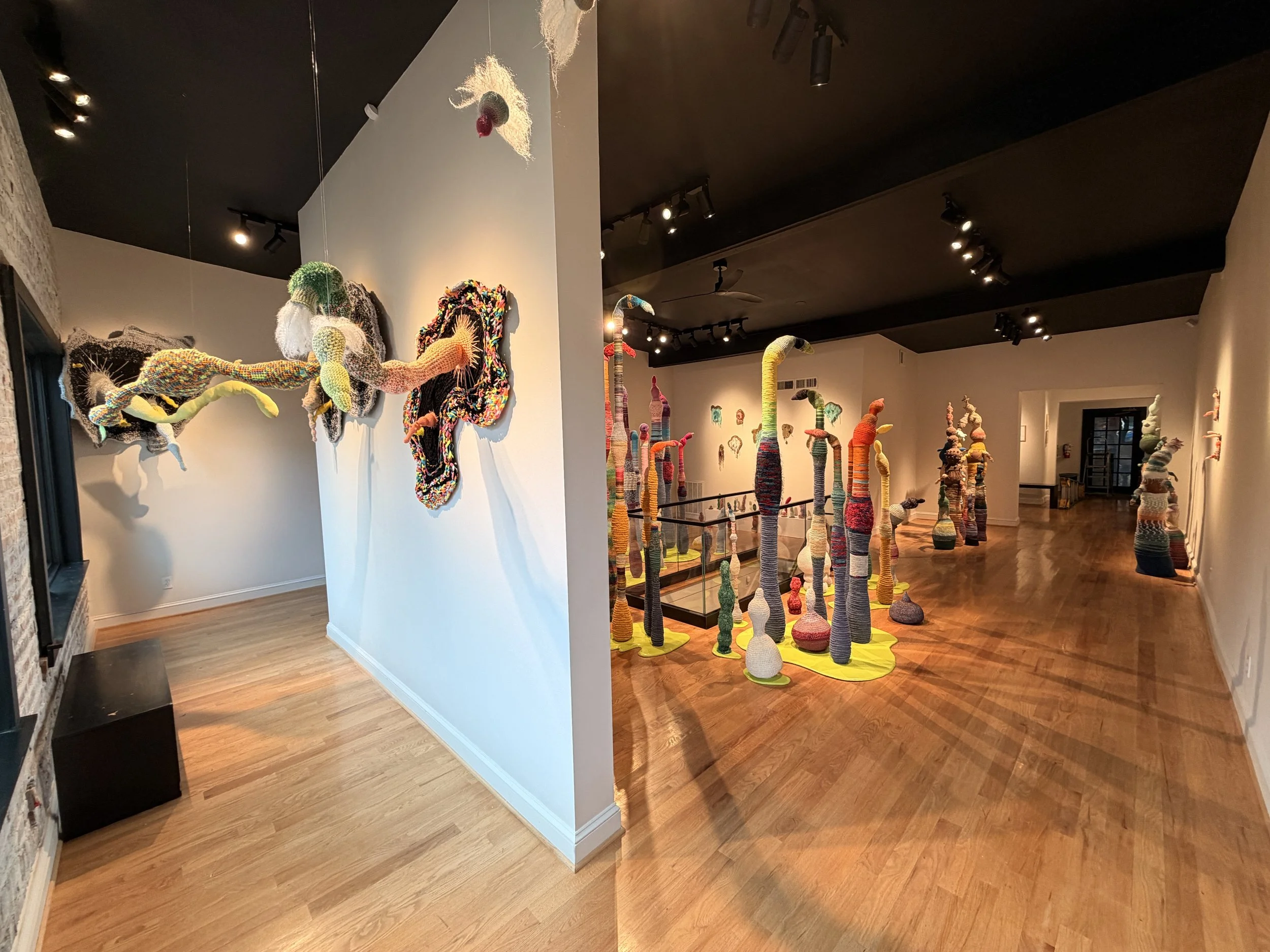
Thingumabob has grown from one to many, while each maintains its uniqueness: all composed of different colors and materials; some are tall, some grow from the ground, some are short, and some are emerging from surprising corners and walls. The exhibit is a thriving community of the colorful and unexpected, and visitors are invited to walk amongst the Thingumbobs, to become part of their ecosystem in the same way that interactions in nature can be a catalyst for something new.
Each individual Thingumabab is connected by one unbroken thread, highlighting the interconnectedness within any society. The Thingumabob Society is one of many monuments in this diverse capital of Washington, D.C., in a nation that continues to redefine itself through relationships and challenges on the global sphere. Ultimately, this exhibit encourages us to consider the multitudes that any one contains, and the strength and dynamism in a community.
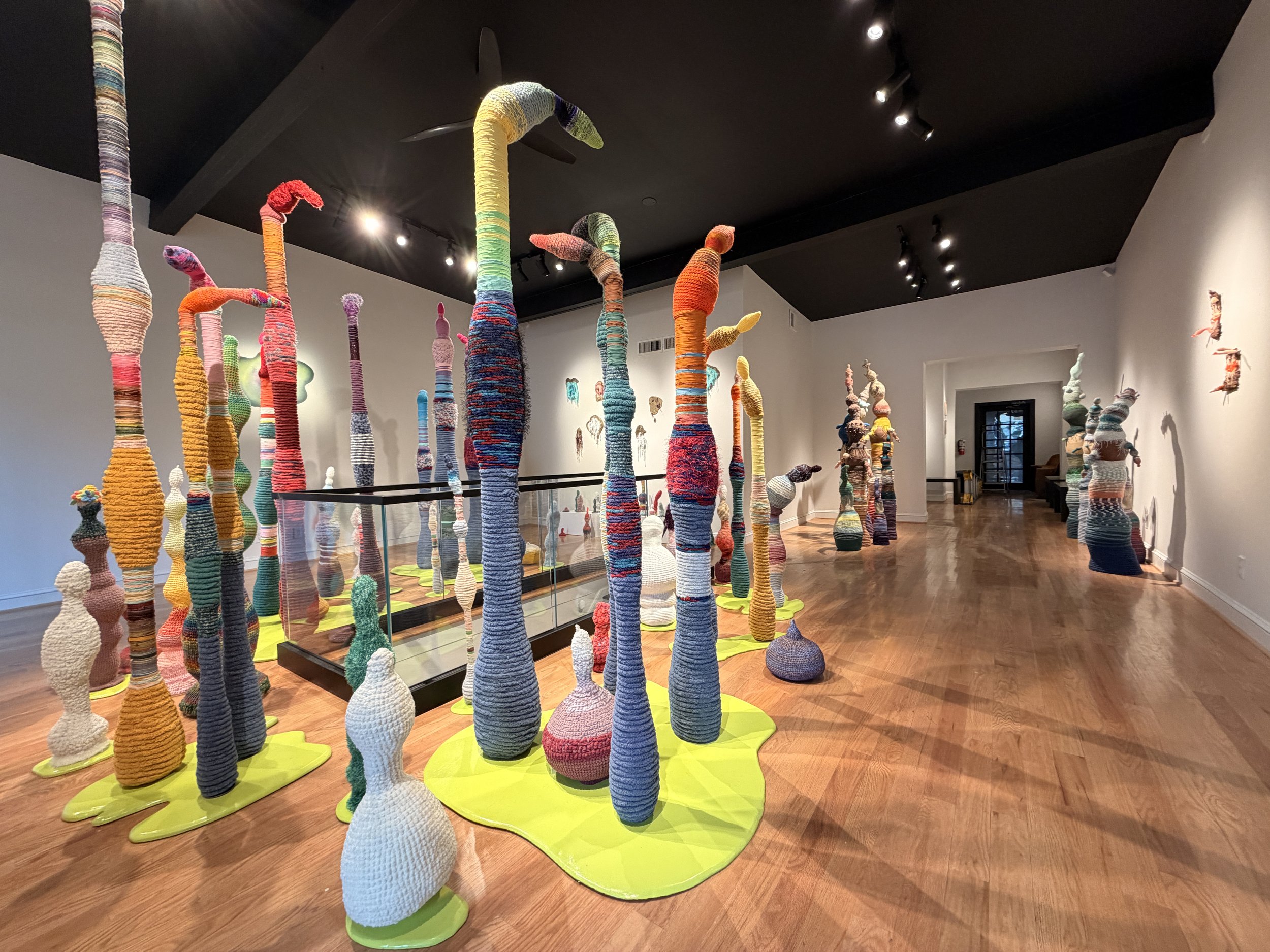
Gallery Shot of One Thread, Many Bodies: The Thingumabob Community
Currently on display at The DC Arts Center
Curated by Thu Anh Nguyen
Work by Hyunsuk Erickson
January 9 - February 7, 2026
Wednesday - Sunday 2:00 PM - 7:00 PM
MAIN GALLERY / The DC Arts Center Presents
One Thread, Many Bodies:
The Thingumabob Community
Curated by
Thu Anh Nguyen
Quick Links
Gallery Shot of One Thread, Many Bodies: The Thingumabob Community
Currently on display at The DC Arts Center
Curated by Thu Anh Nguyen
Work by Hyunsuk Erickson
Featured Artist
Hyunsuk Erickson
Hyunsuk Erickson
Thingumabob Society, 2023
Yarn, PVC pipe, paper roll, wood bead, poly-fill, metal pipe, and acrylic paint
Variable Dimensions
Opening Celebration
Friday, January 9, 2026
7:00 - 9:00 PM
Artist Talk
Saturday, January 31, 2026
3:00 - 4:00 PM
Curatorial Tour & Closing Reception
Saturday, February 7, 2026
6:00 PM - 8:00 PM
About the Exhibition
One Thread, Many Bodies explores the intersection of contemporary sculpture and traditional fiber arts through multicolored totems made from new and repurposed materials specifically for the space they inhabit. As a Korean-American multidisciplinary artist, Huynsuk Erickson creates art that holds and melds multiple identities, revealing the tensions between adaptation and resistance.
Beginning with organic column-like structures, Erickson encases hard materials such as ceramic, wood, and PVC pipe objects within intricately embroidered and crocheted outer layers. These standing forms, which she calls “Thingumabob,” merge crochet and natural clay with vibrant synthetic materials, embodying a dialogue between heritage and modernity. Erickson uses Korean craftsmanship and philosophical ideas to respond to American materialism with repurposed items. The exhibit echoes the challenges of consumerism in a changing climate that calls for environmental sustainability, represented by the Thingumabob’s birth from the discomfort.
Thingumabob has grown from one to many, while each maintains its uniqueness: all composed of different colors and materials; some are tall, some grow from the ground, some are short, and some are emerging from surprising corners and walls. The exhibit is a thriving community of the colorful and unexpected, and visitors are invited to walk amongst the Thingumbobs, to become part of their ecosystem in the same way that interactions in nature can be a catalyst for something new.
Each individual Thingumabab is connected by one unbroken thread, highlighting the interconnectedness within any society. The Thingumabob Society is one of many monuments in this diverse capital of Washington, D.C., in a nation that continues to redefine itself through relationships and challenges on the global sphere. Ultimately, this exhibit encourages us to consider the multitudes that any one contains, and the strength and dynamism in a community.
January 9 - February 7, 2026
Wednesday - Sunday 2:00 PM - 7:00 PM
MAIN GALLERY / The DC Arts Center Presents
One Thread, Many Bodies: The Thingumabob Community
Curated by
Thu Anh Nguyen
Quick Links
Featured Artists
Hyunsuk Erickson
Hyunsuk Erickson
Thingumabob Society, 2023
Yarn, PVC pipe, paper roll, wood bead, poly-fill, metal pipe, and acrylic paint
Variable Dimensions
About the Exhibition
One Thread, Many Bodies explores the intersection of contemporary sculpture and traditional fiber arts through multicolored totems made from new and repurposed materials specifically for the space they inhabit. As a Korean-American multidisciplinary artist, Huynsuk Erickson creates art that holds and melds multiple identities, revealing the tensions between adaptation and resistance.
Beginning with organic column-like structures, Erickson encases hard materials such as ceramic, wood, and PVC pipe objects within intricately embroidered and crocheted outer layers. These standing forms, which she calls “Thingumabob,” merge crochet and natural clay with vibrant synthetic materials, embodying a dialogue between heritage and modernity. Erickson uses Korean craftsmanship and philosophical ideas to respond to American materialism with repurposed items. The exhibit echoes the challenges of consumerism in a changing climate that calls for environmental sustainability, represented by the Thingumabob’s birth from the discomfort.
Thingumabob has grown from one to many, while each maintains its uniqueness: all composed of different colors and materials; some are tall, some grow from the ground, some are short, and some are emerging from surprising corners and walls. The exhibit is a thriving community of the colorful and unexpected, and visitors are invited to walk amongst the Thingumbobs, to become part of their ecosystem in the same way that interactions in nature can be a catalyst for something new.
Each individual Thingumabab is connected by one unbroken thread, highlighting the interconnectedness within any society. The Thingumabob Society is one of many monuments in this diverse capital of Washington, D.C., in a nation that continues to redefine itself through relationships and challenges on the global sphere. Ultimately, this exhibit encourages us to consider the multitudes that any one contains, and the strength and dynamism in a community.
Opening Celebration
Friday, January 9, 2026
7:00 - 9:00 PM
Artist Talk
Saturday, January 31, 2026
3:00 - 4:00 PM
Curatorial Tour & Closing Reception
Saturday, February 7, 2026
6:00 PM - 8:00 PM
Hyunsuk Erickson
Thingumabob Society, 2023
Yarn, PVC pipe, paper roll, wood bead, poly-fill, metal pipe, and acrylic paint
Variable Dimensions
Who are we at the beginning of a new year? Who are we in America, as the United States celebrates its 250th birthday in 2026?
One Thread, Many Bodies showcases Hyunsuk Erickson’s Thingumabob multimedia sculptures as memorials and imaginings for the year to come. There are so many ways different cultures and ethnicities recognize new beginnings, and each of the colorful totems reflects Erickson’s cultural hybridity, shaped by both Korean and American influences. As America considers how it began, and where it is headed after 250 years as a nation, the Thingumabobs are a reminder that the future can be all things: complex, beautiful, colorful, and dynamic.
Using traditional fiber arts techniques such as solo weaving, knitting, and crochet work to stitch together wood, ceramics, PVC, and repurposed materials, Erickson navigates the tensions of adaptation and resistance within her identity. Just as it's impossible to unweave one aspect of identity from another, the intersection of fiber and other materials, one Thingumabob to another, reminds us we are a conglomeration of all the disparate parts of ourselves, and society is a tapestry woven of all those separate selves.
As we shift into 2026, we consider what traditions we want to keep and what new ones we want to create. What can still serve us, and what can we jettison? So too has Erickson considered which materials are ready to be repurposed, and how she can shape what’s old into something newly alive. Each Thingumabob has a unique personality, yet remains faceless, inviting open interpretation. Over time, the initial Thingumabob has grown and evolved, expanding from individual forms to multiple families and now into a collective society. This progression represents the complex, interconnected nature of cultural identity and the shared experiences that unite us. The Thingumabob’s growing and thriving in the nation’s capital is a poignant reminder of the diversity of Washington D.C., and all it represents. Each Thingumabob needs the other.
In the evolution from one thingumabob to the connected many, Erickson aims to create spaces for dialogue on cultural identity, transformation, and the fluid nature of belonging. Ultimately, One Thread, Many Bodies asks us to consider: in 2026 and beyond, how will we continue to be in community with each other?

Thu Anh Nguyen
Curator, One Thread, Many Bodies: The Thingumabob Community
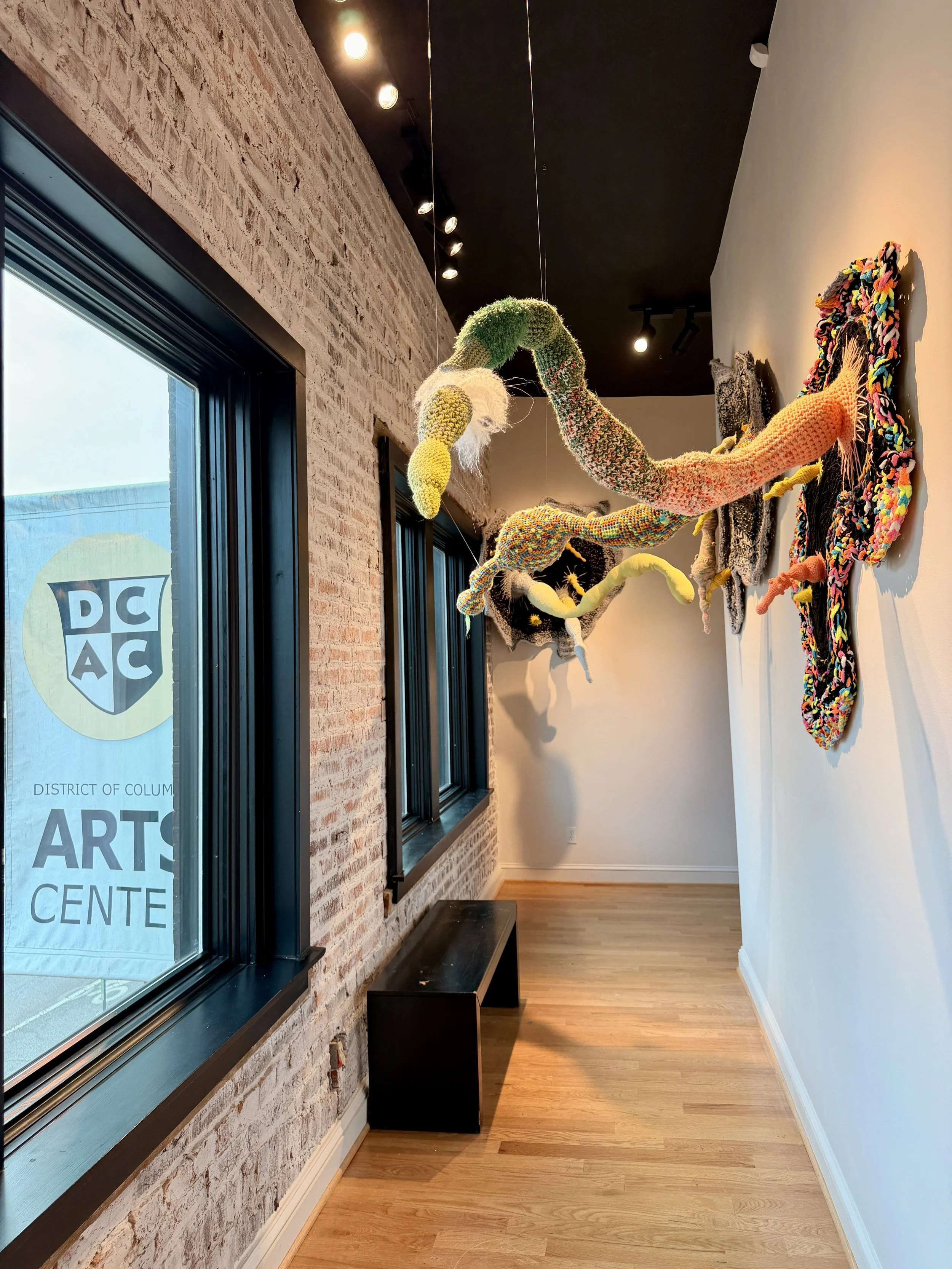
Gallery Shot of One Thread, Many Bodies: The Thingumabob Community
Currently on display at The DC Arts Center
Curated by Thu Anh Nguyen
Work by Hyunsuk Erickson
From
The Curator
From the
Curator
Who are we at the beginning of a new year? Who are we in America, as the United States celebrates its 250th birthday in 2026?
One Thread, Many Bodies showcases Hyunsun Erickson’s Thingumabob multimedia sculptures as memorials and imaginings for the year to come. There are so many ways different cultures and ethnicities recognize new beginnings, and each of the colorful totems reflects Erickson’s cultural hybridity, shaped by both Korean and American influences. As America considers how it began, and where it is headed after 250 years as a nation, the Thingumabobs are a reminder that the future can be all things: complex, beautiful, colorful, and dynamic.
Using traditional fiber arts techniques such as solo weaving, knitting, and crochet work to stitch together wood, ceramics, PVC, and repurposed materials, Erickson navigates the tensions of adaptation and resistance within her identity. Just as it's impossible to unweave one aspect of identity from another, the intersection of fiber and other materials, one Thingumabob to another, reminds us we are a conglomeration of all the disparate parts of ourselves, and society is a tapestry woven of all those separate selves.
As we shift into 2026, we consider what traditions we want to keep and what new ones we want to create. What can still serve us, and what can we jettison? So too has Erickson considered which materials are ready to be repurposed, and how she can shape what’s old into something newly alive. Each Thingumabob has a unique personality, yet remains faceless, inviting open interpretation. Over time, the initial Thingumabob has grown and evolved, expanding from individual forms to multiple families and now into a collective society. This progression represents the complex, interconnected nature of cultural identity and the shared experiences that unite us. The Thingumabob’s growing and thriving in the nation’s capital is a poignant reminder of the diversity of Washington D.C., and all it represents. Each Thingumabob needs the other.
In the evolution from one thingumabob to the connected many, Erickson aims to create spaces for dialogue on cultural identity, transformation, and the fluid nature of belonging.
Ultimately, One Thread, Many Bodies asks us to consider: in 2026 and beyond, how will we continue to be in community with each other?

Curator, One Thread, Many Bodies:
The Thingumabob Community
Hyunsuk Erickson
Thingumabob Society, 2025 Installation
Yarn, PVC pipe, paper roll, wood bead, poly-fill, metal pipe, and acrylic paint
Variable Dimensions
Artist
Biography
Artist
Hyunsuk Erickson
-
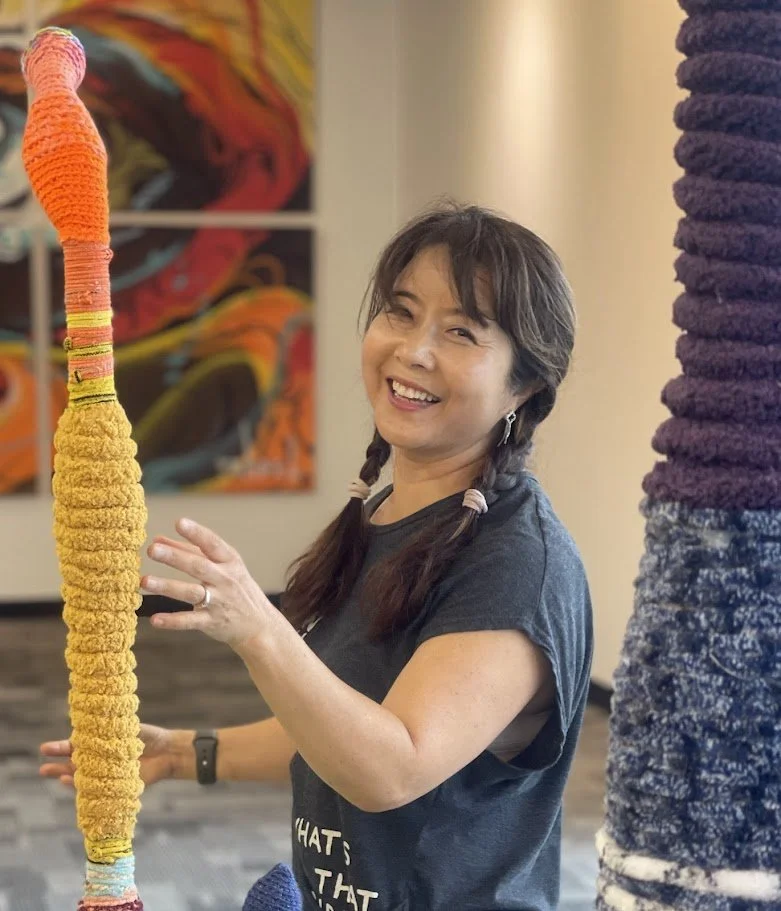
Hyunsuk Erickson (b. Korea) is a Korean-American multidisciplinary artist working primarily in fiber-based sculpture and installation. Shaped by her experiences as an immigrant, a mother, and her upbringing on a family farm in Korea, her practice explores cultural hybridity, consumerism, and environmental sustainability. Through material-driven inquiry, Erickson examines relationships between people, objects, and the environments they inhabit.
Her ongoing project, Thingumabob World, creates immersive sculptural ecosystems that combine traditional fiber techniques—crochet, knotting, and embroidery—with ceramics, wood, PVC, and discarded plastics. These hybrid forms balance opposing forces: soft and structured, organic and synthetic, playful and critical. Using an intuitive, process-based approach, Erickson repurposes overlooked materials to challenge consumer culture while imagining systems of ecological care and renewal.
Erickson has presented solo exhibitions at IA&A at Hillyer (Washington, DC), Burlington City Arts (VT), 636 Art Gallery (Seoul), the Kreeger Museum (DC), Katzen Arts Center (DC), Sandy Spring Museum (MD), and Creative Alliance (Baltimore). Her work is held in public collections, including the Korean Ministry of Environment and the Korean Gas Safety Corporation.
She has participated in artist residencies at Anderson Ranch Arts Center, Vermont Studio Center, the Banff Centre for Arts and Creativity, and Meteora Artist Residency in Greece. Erickson is based in the Washington, DC area.
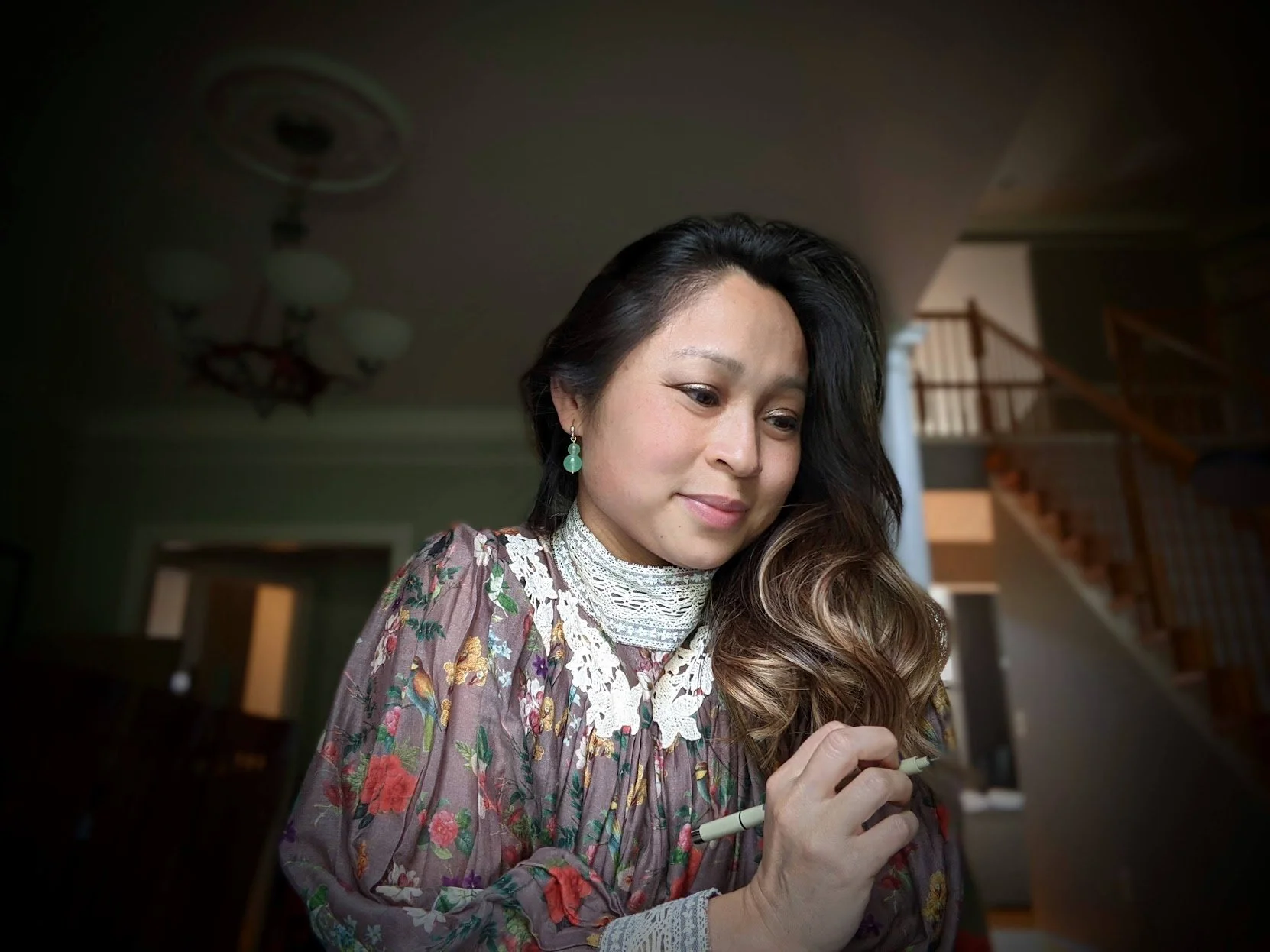
Curator
Biography
Curator
Thu Anh Nguyen
-
Thu Anh Nguyen is a Vietnamese Floridian whose parents did not settle in the United States until they found land (and humidity!) that could grow the same fruits as they did in Vietnam. Every story Thu tells as a poet, painter, and educator is in part that immigration story; therefore, Thu’s work centers equity, justice, and community. As a teacher for 15 years, and as a social justice facilitator presently, Thu explores identity and art, and the revolutionary and reparative movements and practices that they engender.
In her most recent social practice art for institutions such as UMMA, and the High Desert Museum, Thu shapes poetry while listening to conversations about what makes a flourishing community. These conversations often take place in relation to art that Thu has created for the occasion. Thu paints large-scale watercolors and is obsessed with flowers, their symbolism, and beauty. She has painted hundreds of floral protest posters for social justice movements such as Black Lives Matter and Say Her Name. Thu’s floral murals capture the voices of AANHPI women at Gallery Y in D.C., the Asian American community at Amphibian Stage in Fort Worth, TX, and the diversity of the DMV at Culture House.
Thu recently wrote the Reading Guide for Ocean Vuong’s award-winning book The Emperor of Gladness. Thu is also a Pushcart Prize-nominated poet whose poetry explores the intersections and tensions between her Vietnamese and American identities. Her writing has been published in journals such as Literacy Today, the Southern Humanities Review, the Cider Press Review, and the Crab Orchard Review. You may find examples of her work at thuanhnguyen.com
←
You Can Find
Us Here.
2438 18th St. NW
Washington, DC 20009
We’re located on the second floor of the building on 18th St. NW above Mola Empanada and Shiva Tobacco. We’re next to Code Red and located across the street from Tryst and Grand Central. We’re the center door on the ground floor. Our closest two intersections are 18th St. and Columbia Rd. NW, or 18th St. and Belmont Rd. NW.
Street parking is notoriously limited. Colonial Parking, a private paid garage, is located on 18th St. NW behind Van Leeuwen Ice Cream.
Nearest Metro Station
Woodley Park-Zoo/Adams Morgan (Red Line)
Dupont Circle (Red Line)
Columbia Heights (Green/Yellow Line)
Metrobus Routes
Bus Stops at 18th St. & Columbia Rd. NW
C51, C53, D72, D74