
Closing Reception: Sign of the Times
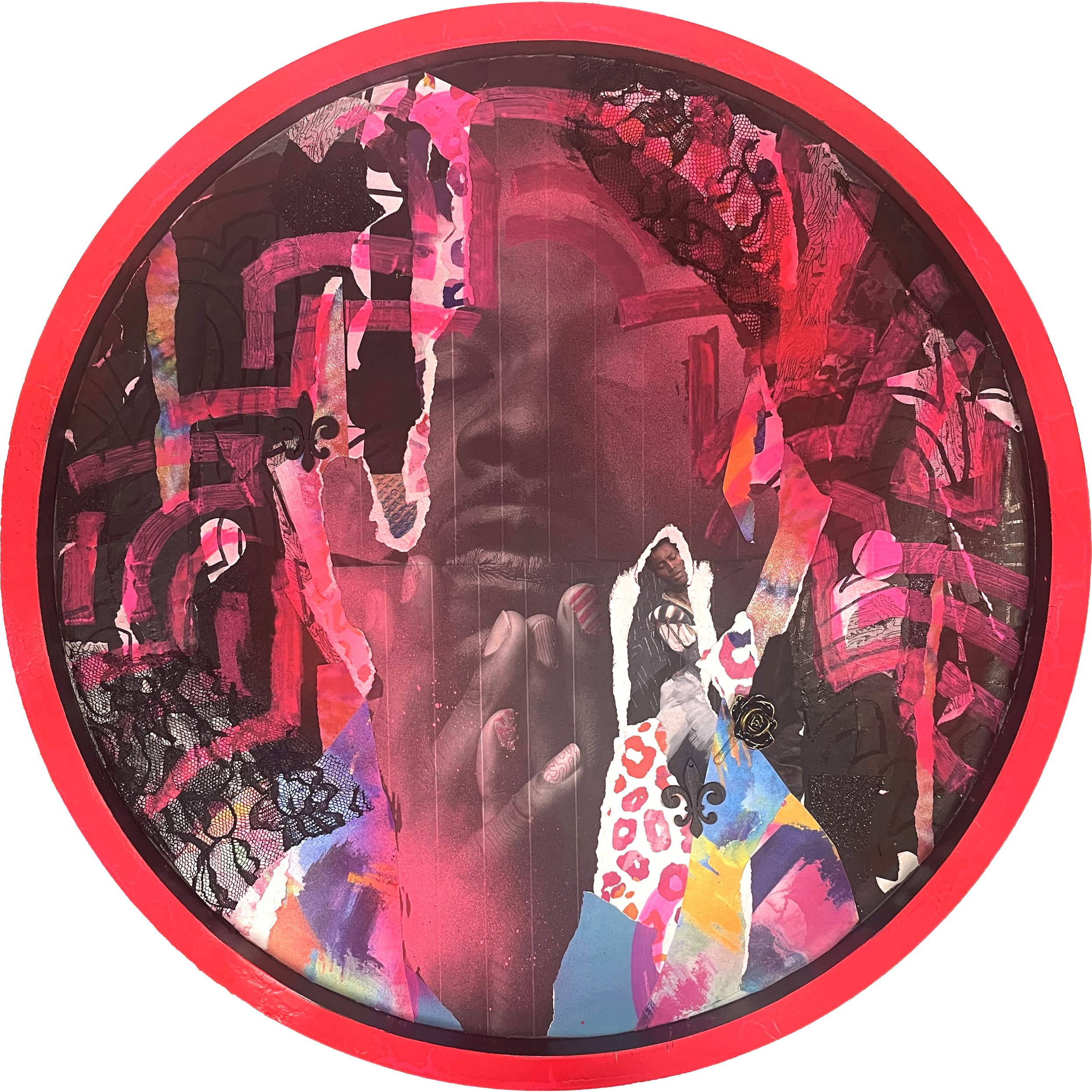
Sign of the Times describes this point in human history as pivotal. How we organize ourselves going forward, in a world of competing values, is up for grabs. It is in this context of radical climate change, both meteorological and societal, that the artists of DCAC’s Sparkplug operate. Affirming that such instability demands that the innerself seek some sort of solace, many of these artists recount the importance of companionship, spiritual warmth, and expression. This exhibition does not provide any easy answers, because there aren’t any. While maintaining that things may work out for the better, it acknowledges that the obstacles are real, and how we negotiate them is likely to have repercussions going forward.
Given the scope of these developments, no one point of view could cover them all. Picked for its diversity, DCAC’s Sparkplug collective, including: Yerke Abuova, John T. Allen, Nikki Brooks, Mentwab Easwaran, Katie Magician, Rashad A Muhammad, Kristina Penhoet, Lucas Rougeux, Dina Salem, and Samantha Van Heest, is in a good position to give us an overview. By delivering a mosaic of perspectives, this show, when taken as a whole, provides an overall picture of how things are developing. As viewers, we can better anticipate the possibilities that confront us when they are played out before us in the gallery, positioning us to better survive them.
Sign of the Times reacts to this atmosphere of uncertainty, delivering visions that characterize ideals, seek sanctuary, and provide hope, while recognizing the challenges before us.
Sign of the Times
Sign of the Times describes this point in human history as pivotal. How we organize ourselves going forward, in a world of competing values, is up for grabs. It is in this context of radical climate change, both meteorological and societal, that the artists of DCAC’s Sparkplug operate. Affirming that such instability demands that the innerself seek some sort of solace, many of these artists recount the importance of companionship, spiritual warmth, and expression. This exhibition does not provide any easy answers, because there aren’t any. While maintaining that things may work out for the better, it acknowledges that the obstacles are real, and how we negotiate them is likely to have repercussions going forward.
Given the scope of these developments, no one point of view could cover them all. Picked for its diversity, DCAC’s Sparkplug collective, including: Yerke Abuova, John T. Allen, Nikki Brooks, Mentwab Easwaran, Katie Magician, Rashad A Muhammad, Kristina Penhoet, Lucas Rougeux, Dina Salem, and Samantha Van Heest, is in a good position to give us an overview. By delivering a mosaic of perspectives, this show, when taken as a whole, provides an overall picture of how things are developing. As viewers, we can better anticipate the possibilities that confront us when they are played out before us in the gallery, positioning us to better survive them.
Sign of the Times reacts to this atmosphere of uncertainty, delivering visions that characterize ideals, seek sanctuary, and provide hope, while recognizing the challenges before us.
Sign of the Times
Sign of the Times describes this point in human history as pivotal. How we organize ourselves going forward, in a world of competing values, is up for grabs. It is in this context of radical climate change, both meteorological and societal, that the artists of DCAC’s Sparkplug operate. Affirming that such instability demands that the innerself seek some sort of solace, many of these artists recount the importance of companionship, spiritual warmth, and expression. This exhibition does not provide any easy answers, because there aren’t any. While maintaining that things may work out for the better, it acknowledges that the obstacles are real, and how we negotiate them is likely to have repercussions going forward.
Given the scope of these developments, no one point of view could cover them all. Picked for its diversity, DCAC’s Sparkplug collective, including: Yerke Abuova, John T. Allen, Nikki Brooks, Mentwab Easwaran, Katie Magician, Rashad A Muhammad, Kristina Penhoet, Lucas Rougeux, Dina Salem, and Samantha Van Heest, is in a good position to give us an overview. By delivering a mosaic of perspectives, this show, when taken as a whole, provides an overall picture of how things are developing. As viewers, we can better anticipate the possibilities that confront us when they are played out before us in the gallery, positioning us to better survive them.
Sign of the Times reacts to this atmosphere of uncertainty, delivering visions that characterize ideals, seek sanctuary, and provide hope, while recognizing the challenges before us.
Sign of the Times
Sign of the Times describes this point in human history as pivotal. How we organize ourselves going forward, in a world of competing values, is up for grabs. It is in this context of radical climate change, both meteorological and societal, that the artists of DCAC’s Sparkplug operate. Affirming that such instability demands that the innerself seek some sort of solace, many of these artists recount the importance of companionship, spiritual warmth, and expression. This exhibition does not provide any easy answers, because there aren’t any. While maintaining that things may work out for the better, it acknowledges that the obstacles are real, and how we negotiate them is likely to have repercussions going forward.
Given the scope of these developments, no one point of view could cover them all. Picked for its diversity, DCAC’s Sparkplug collective, including: Yerke Abuova, John T. Allen, Nikki Brooks, Mentwab Easwaran, Katie Magician, Rashad A Muhammad, Kristina Penhoet, Lucas Rougeux, Dina Salem, and Samantha Van Heest, is in a good position to give us an overview. By delivering a mosaic of perspectives, this show, when taken as a whole, provides an overall picture of how things are developing. As viewers, we can better anticipate the possibilities that confront us when they are played out before us in the gallery, positioning us to better survive them.
Sign of the Times reacts to this atmosphere of uncertainty, delivering visions that characterize ideals, seek sanctuary, and provide hope, while recognizing the challenges before us.
Sign of the Times
Sign of the Times describes this point in human history as pivotal. How we organize ourselves going forward, in a world of competing values, is up for grabs. It is in this context of radical climate change, both meteorological and societal, that the artists of DCAC’s Sparkplug operate. Affirming that such instability demands that the innerself seek some sort of solace, many of these artists recount the importance of companionship, spiritual warmth, and expression. This exhibition does not provide any easy answers, because there aren’t any. While maintaining that things may work out for the better, it acknowledges that the obstacles are real, and how we negotiate them is likely to have repercussions going forward.
Given the scope of these developments, no one point of view could cover them all. Picked for its diversity, DCAC’s Sparkplug collective, including: Yerke Abuova, John T. Allen, Nikki Brooks, Mentwab Easwaran, Katie Magician, Rashad A Muhammad, Kristina Penhoet, Lucas Rougeux, Dina Salem, and Samantha Van Heest, is in a good position to give us an overview. By delivering a mosaic of perspectives, this show, when taken as a whole, provides an overall picture of how things are developing. As viewers, we can better anticipate the possibilities that confront us when they are played out before us in the gallery, positioning us to better survive them.
Sign of the Times reacts to this atmosphere of uncertainty, delivering visions that characterize ideals, seek sanctuary, and provide hope, while recognizing the challenges before us.
Sign of the Times
Sign of the Times describes this point in human history as pivotal. How we organize ourselves going forward, in a world of competing values, is up for grabs. It is in this context of radical climate change, both meteorological and societal, that the artists of DCAC’s Sparkplug operate. Affirming that such instability demands that the innerself seek some sort of solace, many of these artists recount the importance of companionship, spiritual warmth, and expression. This exhibition does not provide any easy answers, because there aren’t any. While maintaining that things may work out for the better, it acknowledges that the obstacles are real, and how we negotiate them is likely to have repercussions going forward.
Given the scope of these developments, no one point of view could cover them all. Picked for its diversity, DCAC’s Sparkplug collective, including: Yerke Abuova, John T. Allen, Nikki Brooks, Mentwab Easwaran, Katie Magician, Rashad A Muhammad, Kristina Penhoet, Lucas Rougeux, Dina Salem, and Samantha Van Heest, is in a good position to give us an overview. By delivering a mosaic of perspectives, this show, when taken as a whole, provides an overall picture of how things are developing. As viewers, we can better anticipate the possibilities that confront us when they are played out before us in the gallery, positioning us to better survive them.
Sign of the Times reacts to this atmosphere of uncertainty, delivering visions that characterize ideals, seek sanctuary, and provide hope, while recognizing the challenges before us.
Artist Talk: Sign of the Times
Sign of the Times describes this point in human history as pivotal. How we organize ourselves going forward, in a world of competing values, is up for grabs. It is in this context of radical climate change, both meteorological and societal, that the artists of DCAC’s Sparkplug operate. Affirming that such instability demands that the innerself seek some sort of solace, many of these artists recount the importance of companionship, spiritual warmth, and expression. This exhibition does not provide any easy answers, because there aren’t any. While maintaining that things may work out for the better, it acknowledges that the obstacles are real, and how we negotiate them is likely to have repercussions going forward.
Given the scope of these developments, no one point of view could cover them all. Picked for its diversity, DCAC’s Sparkplug collective, including: Yerke Abuova, John T. Allen, Nikki Brooks, Mentwab Easwaran, Katie Magician, Rashad A Muhammad, Kristina Penhoet, Lucas Rougeux, Dina Salem, and Samantha Van Heest, is in a good position to give us an overview. By delivering a mosaic of perspectives, this show, when taken as a whole, provides an overall picture of how things are developing. As viewers, we can better anticipate the possibilities that confront us when they are played out before us in the gallery, positioning us to better survive them.
Sign of the Times reacts to this atmosphere of uncertainty, delivering visions that characterize ideals, seek sanctuary, and provide hope, while recognizing the challenges before us.
Sign of the Times
Sign of the Times describes this point in human history as pivotal. How we organize ourselves going forward, in a world of competing values, is up for grabs. It is in this context of radical climate change, both meteorological and societal, that the artists of DCAC’s Sparkplug operate. Affirming that such instability demands that the innerself seek some sort of solace, many of these artists recount the importance of companionship, spiritual warmth, and expression. This exhibition does not provide any easy answers, because there aren’t any. While maintaining that things may work out for the better, it acknowledges that the obstacles are real, and how we negotiate them is likely to have repercussions going forward.
Given the scope of these developments, no one point of view could cover them all. Picked for its diversity, DCAC’s Sparkplug collective, including: Yerke Abuova, John T. Allen, Nikki Brooks, Mentwab Easwaran, Katie Magician, Rashad A Muhammad, Kristina Penhoet, Lucas Rougeux, Dina Salem, and Samantha Van Heest, is in a good position to give us an overview. By delivering a mosaic of perspectives, this show, when taken as a whole, provides an overall picture of how things are developing. As viewers, we can better anticipate the possibilities that confront us when they are played out before us in the gallery, positioning us to better survive them.
Sign of the Times reacts to this atmosphere of uncertainty, delivering visions that characterize ideals, seek sanctuary, and provide hope, while recognizing the challenges before us.
Sign of the Times
Sign of the Times describes this point in human history as pivotal. How we organize ourselves going forward, in a world of competing values, is up for grabs. It is in this context of radical climate change, both meteorological and societal, that the artists of DCAC’s Sparkplug operate. Affirming that such instability demands that the innerself seek some sort of solace, many of these artists recount the importance of companionship, spiritual warmth, and expression. This exhibition does not provide any easy answers, because there aren’t any. While maintaining that things may work out for the better, it acknowledges that the obstacles are real, and how we negotiate them is likely to have repercussions going forward.
Given the scope of these developments, no one point of view could cover them all. Picked for its diversity, DCAC’s Sparkplug collective, including: Yerke Abuova, John T. Allen, Nikki Brooks, Mentwab Easwaran, Katie Magician, Rashad A Muhammad, Kristina Penhoet, Lucas Rougeux, Dina Salem, and Samantha Van Heest, is in a good position to give us an overview. By delivering a mosaic of perspectives, this show, when taken as a whole, provides an overall picture of how things are developing. As viewers, we can better anticipate the possibilities that confront us when they are played out before us in the gallery, positioning us to better survive them.
Sign of the Times reacts to this atmosphere of uncertainty, delivering visions that characterize ideals, seek sanctuary, and provide hope, while recognizing the challenges before us.
Sign of the Times
Sign of the Times describes this point in human history as pivotal. How we organize ourselves going forward, in a world of competing values, is up for grabs. It is in this context of radical climate change, both meteorological and societal, that the artists of DCAC’s Sparkplug operate. Affirming that such instability demands that the innerself seek some sort of solace, many of these artists recount the importance of companionship, spiritual warmth, and expression. This exhibition does not provide any easy answers, because there aren’t any. While maintaining that things may work out for the better, it acknowledges that the obstacles are real, and how we negotiate them is likely to have repercussions going forward.
Given the scope of these developments, no one point of view could cover them all. Picked for its diversity, DCAC’s Sparkplug collective, including: Yerke Abuova, John T. Allen, Nikki Brooks, Mentwab Easwaran, Katie Magician, Rashad A Muhammad, Kristina Penhoet, Lucas Rougeux, Dina Salem, and Samantha Van Heest, is in a good position to give us an overview. By delivering a mosaic of perspectives, this show, when taken as a whole, provides an overall picture of how things are developing. As viewers, we can better anticipate the possibilities that confront us when they are played out before us in the gallery, positioning us to better survive them.
Sign of the Times reacts to this atmosphere of uncertainty, delivering visions that characterize ideals, seek sanctuary, and provide hope, while recognizing the challenges before us.
Sign of the Times
Sign of the Times describes this point in human history as pivotal. How we organize ourselves going forward, in a world of competing values, is up for grabs. It is in this context of radical climate change, both meteorological and societal, that the artists of DCAC’s Sparkplug operate. Affirming that such instability demands that the innerself seek some sort of solace, many of these artists recount the importance of companionship, spiritual warmth, and expression. This exhibition does not provide any easy answers, because there aren’t any. While maintaining that things may work out for the better, it acknowledges that the obstacles are real, and how we negotiate them is likely to have repercussions going forward.
Given the scope of these developments, no one point of view could cover them all. Picked for its diversity, DCAC’s Sparkplug collective, including: Yerke Abuova, John T. Allen, Nikki Brooks, Mentwab Easwaran, Katie Magician, Rashad A Muhammad, Kristina Penhoet, Lucas Rougeux, Dina Salem, and Samantha Van Heest, is in a good position to give us an overview. By delivering a mosaic of perspectives, this show, when taken as a whole, provides an overall picture of how things are developing. As viewers, we can better anticipate the possibilities that confront us when they are played out before us in the gallery, positioning us to better survive them.
Sign of the Times reacts to this atmosphere of uncertainty, delivering visions that characterize ideals, seek sanctuary, and provide hope, while recognizing the challenges before us.
Sign of the Times
Sign of the Times describes this point in human history as pivotal. How we organize ourselves going forward, in a world of competing values, is up for grabs. It is in this context of radical climate change, both meteorological and societal, that the artists of DCAC’s Sparkplug operate. Affirming that such instability demands that the innerself seek some sort of solace, many of these artists recount the importance of companionship, spiritual warmth, and expression. This exhibition does not provide any easy answers, because there aren’t any. While maintaining that things may work out for the better, it acknowledges that the obstacles are real, and how we negotiate them is likely to have repercussions going forward.
Given the scope of these developments, no one point of view could cover them all. Picked for its diversity, DCAC’s Sparkplug collective, including: Yerke Abuova, John T. Allen, Nikki Brooks, Mentwab Easwaran, Katie Magician, Rashad A Muhammad, Kristina Penhoet, Lucas Rougeux, Dina Salem, and Samantha Van Heest, is in a good position to give us an overview. By delivering a mosaic of perspectives, this show, when taken as a whole, provides an overall picture of how things are developing. As viewers, we can better anticipate the possibilities that confront us when they are played out before us in the gallery, positioning us to better survive them.
Sign of the Times reacts to this atmosphere of uncertainty, delivering visions that characterize ideals, seek sanctuary, and provide hope, while recognizing the challenges before us.
Sign of the Times
Sign of the Times describes this point in human history as pivotal. How we organize ourselves going forward, in a world of competing values, is up for grabs. It is in this context of radical climate change, both meteorological and societal, that the artists of DCAC’s Sparkplug operate. Affirming that such instability demands that the innerself seek some sort of solace, many of these artists recount the importance of companionship, spiritual warmth, and expression. This exhibition does not provide any easy answers, because there aren’t any. While maintaining that things may work out for the better, it acknowledges that the obstacles are real, and how we negotiate them is likely to have repercussions going forward.
Given the scope of these developments, no one point of view could cover them all. Picked for its diversity, DCAC’s Sparkplug collective, including: Yerke Abuova, John T. Allen, Nikki Brooks, Mentwab Easwaran, Katie Magician, Rashad A Muhammad, Kristina Penhoet, Lucas Rougeux, Dina Salem, and Samantha Van Heest, is in a good position to give us an overview. By delivering a mosaic of perspectives, this show, when taken as a whole, provides an overall picture of how things are developing. As viewers, we can better anticipate the possibilities that confront us when they are played out before us in the gallery, positioning us to better survive them.
Sign of the Times reacts to this atmosphere of uncertainty, delivering visions that characterize ideals, seek sanctuary, and provide hope, while recognizing the challenges before us.
Sign of the Times
Sign of the Times describes this point in human history as pivotal. How we organize ourselves going forward, in a world of competing values, is up for grabs. It is in this context of radical climate change, both meteorological and societal, that the artists of DCAC’s Sparkplug operate. Affirming that such instability demands that the innerself seek some sort of solace, many of these artists recount the importance of companionship, spiritual warmth, and expression. This exhibition does not provide any easy answers, because there aren’t any. While maintaining that things may work out for the better, it acknowledges that the obstacles are real, and how we negotiate them is likely to have repercussions going forward.
Given the scope of these developments, no one point of view could cover them all. Picked for its diversity, DCAC’s Sparkplug collective, including: Yerke Abuova, John T. Allen, Nikki Brooks, Mentwab Easwaran, Katie Magician, Rashad A Muhammad, Kristina Penhoet, Lucas Rougeux, Dina Salem, and Samantha Van Heest, is in a good position to give us an overview. By delivering a mosaic of perspectives, this show, when taken as a whole, provides an overall picture of how things are developing. As viewers, we can better anticipate the possibilities that confront us when they are played out before us in the gallery, positioning us to better survive them.
Sign of the Times reacts to this atmosphere of uncertainty, delivering visions that characterize ideals, seek sanctuary, and provide hope, while recognizing the challenges before us.
Sign of the Times
Sign of the Times describes this point in human history as pivotal. How we organize ourselves going forward, in a world of competing values, is up for grabs. It is in this context of radical climate change, both meteorological and societal, that the artists of DCAC’s Sparkplug operate. Affirming that such instability demands that the innerself seek some sort of solace, many of these artists recount the importance of companionship, spiritual warmth, and expression. This exhibition does not provide any easy answers, because there aren’t any. While maintaining that things may work out for the better, it acknowledges that the obstacles are real, and how we negotiate them is likely to have repercussions going forward.
Given the scope of these developments, no one point of view could cover them all. Picked for its diversity, DCAC’s Sparkplug collective, including: Yerke Abuova, John T. Allen, Nikki Brooks, Mentwab Easwaran, Katie Magician, Rashad A Muhammad, Kristina Penhoet, Lucas Rougeux, Dina Salem, and Samantha Van Heest, is in a good position to give us an overview. By delivering a mosaic of perspectives, this show, when taken as a whole, provides an overall picture of how things are developing. As viewers, we can better anticipate the possibilities that confront us when they are played out before us in the gallery, positioning us to better survive them.
Sign of the Times reacts to this atmosphere of uncertainty, delivering visions that characterize ideals, seek sanctuary, and provide hope, while recognizing the challenges before us.
Sign of the Times
Sign of the Times describes this point in human history as pivotal. How we organize ourselves going forward, in a world of competing values, is up for grabs. It is in this context of radical climate change, both meteorological and societal, that the artists of DCAC’s Sparkplug operate. Affirming that such instability demands that the innerself seek some sort of solace, many of these artists recount the importance of companionship, spiritual warmth, and expression. This exhibition does not provide any easy answers, because there aren’t any. While maintaining that things may work out for the better, it acknowledges that the obstacles are real, and how we negotiate them is likely to have repercussions going forward.
Given the scope of these developments, no one point of view could cover them all. Picked for its diversity, DCAC’s Sparkplug collective, including: Yerke Abuova, John T. Allen, Nikki Brooks, Mentwab Easwaran, Katie Magician, Rashad A Muhammad, Kristina Penhoet, Lucas Rougeux, Dina Salem, and Samantha Van Heest, is in a good position to give us an overview. By delivering a mosaic of perspectives, this show, when taken as a whole, provides an overall picture of how things are developing. As viewers, we can better anticipate the possibilities that confront us when they are played out before us in the gallery, positioning us to better survive them.
Sign of the Times reacts to this atmosphere of uncertainty, delivering visions that characterize ideals, seek sanctuary, and provide hope, while recognizing the challenges before us.
Sign of the Times
Sign of the Times describes this point in human history as pivotal. How we organize ourselves going forward, in a world of competing values, is up for grabs. It is in this context of radical climate change, both meteorological and societal, that the artists of DCAC’s Sparkplug operate. Affirming that such instability demands that the innerself seek some sort of solace, many of these artists recount the importance of companionship, spiritual warmth, and expression. This exhibition does not provide any easy answers, because there aren’t any. While maintaining that things may work out for the better, it acknowledges that the obstacles are real, and how we negotiate them is likely to have repercussions going forward.
Given the scope of these developments, no one point of view could cover them all. Picked for its diversity, DCAC’s Sparkplug collective, including: Yerke Abuova, John T. Allen, Nikki Brooks, Mentwab Easwaran, Katie Magician, Rashad A Muhammad, Kristina Penhoet, Lucas Rougeux, Dina Salem, and Samantha Van Heest, is in a good position to give us an overview. By delivering a mosaic of perspectives, this show, when taken as a whole, provides an overall picture of how things are developing. As viewers, we can better anticipate the possibilities that confront us when they are played out before us in the gallery, positioning us to better survive them.
Sign of the Times reacts to this atmosphere of uncertainty, delivering visions that characterize ideals, seek sanctuary, and provide hope, while recognizing the challenges before us.
Sign of the Times
Sign of the Times describes this point in human history as pivotal. How we organize ourselves going forward, in a world of competing values, is up for grabs. It is in this context of radical climate change, both meteorological and societal, that the artists of DCAC’s Sparkplug operate. Affirming that such instability demands that the innerself seek some sort of solace, many of these artists recount the importance of companionship, spiritual warmth, and expression. This exhibition does not provide any easy answers, because there aren’t any. While maintaining that things may work out for the better, it acknowledges that the obstacles are real, and how we negotiate them is likely to have repercussions going forward.
Given the scope of these developments, no one point of view could cover them all. Picked for its diversity, DCAC’s Sparkplug collective, including: Yerke Abuova, John T. Allen, Nikki Brooks, Mentwab Easwaran, Katie Magician, Rashad A Muhammad, Kristina Penhoet, Lucas Rougeux, Dina Salem, and Samantha Van Heest, is in a good position to give us an overview. By delivering a mosaic of perspectives, this show, when taken as a whole, provides an overall picture of how things are developing. As viewers, we can better anticipate the possibilities that confront us when they are played out before us in the gallery, positioning us to better survive them.
Sign of the Times reacts to this atmosphere of uncertainty, delivering visions that characterize ideals, seek sanctuary, and provide hope, while recognizing the challenges before us.
Sign of the Times
Sign of the Times describes this point in human history as pivotal. How we organize ourselves going forward, in a world of competing values, is up for grabs. It is in this context of radical climate change, both meteorological and societal, that the artists of DCAC’s Sparkplug operate. Affirming that such instability demands that the innerself seek some sort of solace, many of these artists recount the importance of companionship, spiritual warmth, and expression. This exhibition does not provide any easy answers, because there aren’t any. While maintaining that things may work out for the better, it acknowledges that the obstacles are real, and how we negotiate them is likely to have repercussions going forward.
Given the scope of these developments, no one point of view could cover them all. Picked for its diversity, DCAC’s Sparkplug collective, including: Yerke Abuova, John T. Allen, Nikki Brooks, Mentwab Easwaran, Katie Magician, Rashad A Muhammad, Kristina Penhoet, Lucas Rougeux, Dina Salem, and Samantha Van Heest, is in a good position to give us an overview. By delivering a mosaic of perspectives, this show, when taken as a whole, provides an overall picture of how things are developing. As viewers, we can better anticipate the possibilities that confront us when they are played out before us in the gallery, positioning us to better survive them.
Sign of the Times reacts to this atmosphere of uncertainty, delivering visions that characterize ideals, seek sanctuary, and provide hope, while recognizing the challenges before us.
Sign of the Times
Sign of the Times describes this point in human history as pivotal. How we organize ourselves going forward, in a world of competing values, is up for grabs. It is in this context of radical climate change, both meteorological and societal, that the artists of DCAC’s Sparkplug operate. Affirming that such instability demands that the innerself seek some sort of solace, many of these artists recount the importance of companionship, spiritual warmth, and expression. This exhibition does not provide any easy answers, because there aren’t any. While maintaining that things may work out for the better, it acknowledges that the obstacles are real, and how we negotiate them is likely to have repercussions going forward.
Given the scope of these developments, no one point of view could cover them all. Picked for its diversity, DCAC’s Sparkplug collective, including: Yerke Abuova, John T. Allen, Nikki Brooks, Mentwab Easwaran, Katie Magician, Rashad A Muhammad, Kristina Penhoet, Lucas Rougeux, Dina Salem, and Samantha Van Heest, is in a good position to give us an overview. By delivering a mosaic of perspectives, this show, when taken as a whole, provides an overall picture of how things are developing. As viewers, we can better anticipate the possibilities that confront us when they are played out before us in the gallery, positioning us to better survive them.
Sign of the Times reacts to this atmosphere of uncertainty, delivering visions that characterize ideals, seek sanctuary, and provide hope, while recognizing the challenges before us.
Sign of the Times
Sign of the Times describes this point in human history as pivotal. How we organize ourselves going forward, in a world of competing values, is up for grabs. It is in this context of radical climate change, both meteorological and societal, that the artists of DCAC’s Sparkplug operate. Affirming that such instability demands that the innerself seek some sort of solace, many of these artists recount the importance of companionship, spiritual warmth, and expression. This exhibition does not provide any easy answers, because there aren’t any. While maintaining that things may work out for the better, it acknowledges that the obstacles are real, and how we negotiate them is likely to have repercussions going forward.
Given the scope of these developments, no one point of view could cover them all. Picked for its diversity, DCAC’s Sparkplug collective, including: Yerke Abuova, John T. Allen, Nikki Brooks, Mentwab Easwaran, Katie Magician, Rashad A Muhammad, Kristina Penhoet, Lucas Rougeux, Dina Salem, and Samantha Van Heest, is in a good position to give us an overview. By delivering a mosaic of perspectives, this show, when taken as a whole, provides an overall picture of how things are developing. As viewers, we can better anticipate the possibilities that confront us when they are played out before us in the gallery, positioning us to better survive them.
Sign of the Times reacts to this atmosphere of uncertainty, delivering visions that characterize ideals, seek sanctuary, and provide hope, while recognizing the challenges before us.
Sign of the Times
Sign of the Times describes this point in human history as pivotal. How we organize ourselves going forward, in a world of competing values, is up for grabs. It is in this context of radical climate change, both meteorological and societal, that the artists of DCAC’s Sparkplug operate. Affirming that such instability demands that the innerself seek some sort of solace, many of these artists recount the importance of companionship, spiritual warmth, and expression. This exhibition does not provide any easy answers, because there aren’t any. While maintaining that things may work out for the better, it acknowledges that the obstacles are real, and how we negotiate them is likely to have repercussions going forward.
Given the scope of these developments, no one point of view could cover them all. Picked for its diversity, DCAC’s Sparkplug collective, including: Yerke Abuova, John T. Allen, Nikki Brooks, Mentwab Easwaran, Katie Magician, Rashad A Muhammad, Kristina Penhoet, Lucas Rougeux, Dina Salem, and Samantha Van Heest, is in a good position to give us an overview. By delivering a mosaic of perspectives, this show, when taken as a whole, provides an overall picture of how things are developing. As viewers, we can better anticipate the possibilities that confront us when they are played out before us in the gallery, positioning us to better survive them.
Sign of the Times reacts to this atmosphere of uncertainty, delivering visions that characterize ideals, seek sanctuary, and provide hope, while recognizing the challenges before us.
Sign of the Times
Sign of the Times describes this point in human history as pivotal. How we organize ourselves going forward, in a world of competing values, is up for grabs. It is in this context of radical climate change, both meteorological and societal, that the artists of DCAC’s Sparkplug operate. Affirming that such instability demands that the innerself seek some sort of solace, many of these artists recount the importance of companionship, spiritual warmth, and expression. This exhibition does not provide any easy answers, because there aren’t any. While maintaining that things may work out for the better, it acknowledges that the obstacles are real, and how we negotiate them is likely to have repercussions going forward.
Given the scope of these developments, no one point of view could cover them all. Picked for its diversity, DCAC’s Sparkplug collective, including: Yerke Abuova, John T. Allen, Nikki Brooks, Mentwab Easwaran, Katie Magician, Rashad A Muhammad, Kristina Penhoet, Lucas Rougeux, Dina Salem, and Samantha Van Heest, is in a good position to give us an overview. By delivering a mosaic of perspectives, this show, when taken as a whole, provides an overall picture of how things are developing. As viewers, we can better anticipate the possibilities that confront us when they are played out before us in the gallery, positioning us to better survive them.
Sign of the Times reacts to this atmosphere of uncertainty, delivering visions that characterize ideals, seek sanctuary, and provide hope, while recognizing the challenges before us.
Sign of the Times
Sign of the Times describes this point in human history as pivotal. How we organize ourselves going forward, in a world of competing values, is up for grabs. It is in this context of radical climate change, both meteorological and societal, that the artists of DCAC’s Sparkplug operate. Affirming that such instability demands that the innerself seek some sort of solace, many of these artists recount the importance of companionship, spiritual warmth, and expression. This exhibition does not provide any easy answers, because there aren’t any. While maintaining that things may work out for the better, it acknowledges that the obstacles are real, and how we negotiate them is likely to have repercussions going forward.
Given the scope of these developments, no one point of view could cover them all. Picked for its diversity, DCAC’s Sparkplug collective, including: Yerke Abuova, John T. Allen, Nikki Brooks, Mentwab Easwaran, Katie Magician, Rashad A Muhammad, Kristina Penhoet, Lucas Rougeux, Dina Salem, and Samantha Van Heest, is in a good position to give us an overview. By delivering a mosaic of perspectives, this show, when taken as a whole, provides an overall picture of how things are developing. As viewers, we can better anticipate the possibilities that confront us when they are played out before us in the gallery, positioning us to better survive them.
Sign of the Times reacts to this atmosphere of uncertainty, delivering visions that characterize ideals, seek sanctuary, and provide hope, while recognizing the challenges before us.
Sign of the Times
Sign of the Times describes this point in human history as pivotal. How we organize ourselves going forward, in a world of competing values, is up for grabs. It is in this context of radical climate change, both meteorological and societal, that the artists of DCAC’s Sparkplug operate. Affirming that such instability demands that the innerself seek some sort of solace, many of these artists recount the importance of companionship, spiritual warmth, and expression. This exhibition does not provide any easy answers, because there aren’t any. While maintaining that things may work out for the better, it acknowledges that the obstacles are real, and how we negotiate them is likely to have repercussions going forward.
Given the scope of these developments, no one point of view could cover them all. Picked for its diversity, DCAC’s Sparkplug collective, including: Yerke Abuova, John T. Allen, Nikki Brooks, Mentwab Easwaran, Katie Magician, Rashad A Muhammad, Kristina Penhoet, Lucas Rougeux, Dina Salem, and Samantha Van Heest, is in a good position to give us an overview. By delivering a mosaic of perspectives, this show, when taken as a whole, provides an overall picture of how things are developing. As viewers, we can better anticipate the possibilities that confront us when they are played out before us in the gallery, positioning us to better survive them.
Sign of the Times reacts to this atmosphere of uncertainty, delivering visions that characterize ideals, seek sanctuary, and provide hope, while recognizing the challenges before us.
Sign of the Times
Sign of the Times describes this point in human history as pivotal. How we organize ourselves going forward, in a world of competing values, is up for grabs. It is in this context of radical climate change, both meteorological and societal, that the artists of DCAC’s Sparkplug operate. Affirming that such instability demands that the innerself seek some sort of solace, many of these artists recount the importance of companionship, spiritual warmth, and expression. This exhibition does not provide any easy answers, because there aren’t any. While maintaining that things may work out for the better, it acknowledges that the obstacles are real, and how we negotiate them is likely to have repercussions going forward.
Given the scope of these developments, no one point of view could cover them all. Picked for its diversity, DCAC’s Sparkplug collective, including: Yerke Abuova, John T. Allen, Nikki Brooks, Mentwab Easwaran, Katie Magician, Rashad A Muhammad, Kristina Penhoet, Lucas Rougeux, Dina Salem, and Samantha Van Heest, is in a good position to give us an overview. By delivering a mosaic of perspectives, this show, when taken as a whole, provides an overall picture of how things are developing. As viewers, we can better anticipate the possibilities that confront us when they are played out before us in the gallery, positioning us to better survive them.
Sign of the Times reacts to this atmosphere of uncertainty, delivering visions that characterize ideals, seek sanctuary, and provide hope, while recognizing the challenges before us.
Sign of the Times
Sign of the Times describes this point in human history as pivotal. How we organize ourselves going forward, in a world of competing values, is up for grabs. It is in this context of radical climate change, both meteorological and societal, that the artists of DCAC’s Sparkplug operate. Affirming that such instability demands that the innerself seek some sort of solace, many of these artists recount the importance of companionship, spiritual warmth, and expression. This exhibition does not provide any easy answers, because there aren’t any. While maintaining that things may work out for the better, it acknowledges that the obstacles are real, and how we negotiate them is likely to have repercussions going forward.
Given the scope of these developments, no one point of view could cover them all. Picked for its diversity, DCAC’s Sparkplug collective, including: Yerke Abuova, John T. Allen, Nikki Brooks, Mentwab Easwaran, Katie Magician, Rashad A Muhammad, Kristina Penhoet, Lucas Rougeux, Dina Salem, and Samantha Van Heest, is in a good position to give us an overview. By delivering a mosaic of perspectives, this show, when taken as a whole, provides an overall picture of how things are developing. As viewers, we can better anticipate the possibilities that confront us when they are played out before us in the gallery, positioning us to better survive them.
Sign of the Times reacts to this atmosphere of uncertainty, delivering visions that characterize ideals, seek sanctuary, and provide hope, while recognizing the challenges before us.
Opening Celebration: Sign of the Times
Sign of the Times describes this point in human history as pivotal. How we organize ourselves going forward, in a world of competing values, is up for grabs. It is in this context of radical climate change, both meteorological and societal, that the artists of DCAC’s Sparkplug operate. Affirming that such instability demands that the innerself seek some sort of solace, many of these artists recount the importance of companionship, spiritual warmth, and expression. This exhibition does not provide any easy answers, because there aren’t any. While maintaining that things may work out for the better, it acknowledges that the obstacles are real, and how we negotiate them is likely to have repercussions going forward.
Given the scope of these developments, no one point of view could cover them all. Picked for its diversity, DCAC’s Sparkplug collective, including: Yerke Abuova, John T. Allen, Nikki Brooks, Mentwab Easwaran, Katie Magician, Rashad A Muhammad, Kristina Penhoet, Lucas Rougeux, Dina Salem, and Samantha Van Heest, is in a good position to give us an overview. By delivering a mosaic of perspectives, this show, when taken as a whole, provides an overall picture of how things are developing. As viewers, we can better anticipate the possibilities that confront us when they are played out before us in the gallery, positioning us to better survive them.
Sign of the Times reacts to this atmosphere of uncertainty, delivering visions that characterize ideals, seek sanctuary, and provide hope, while recognizing the challenges before us.
Closing Reception: Intrinsic Tool
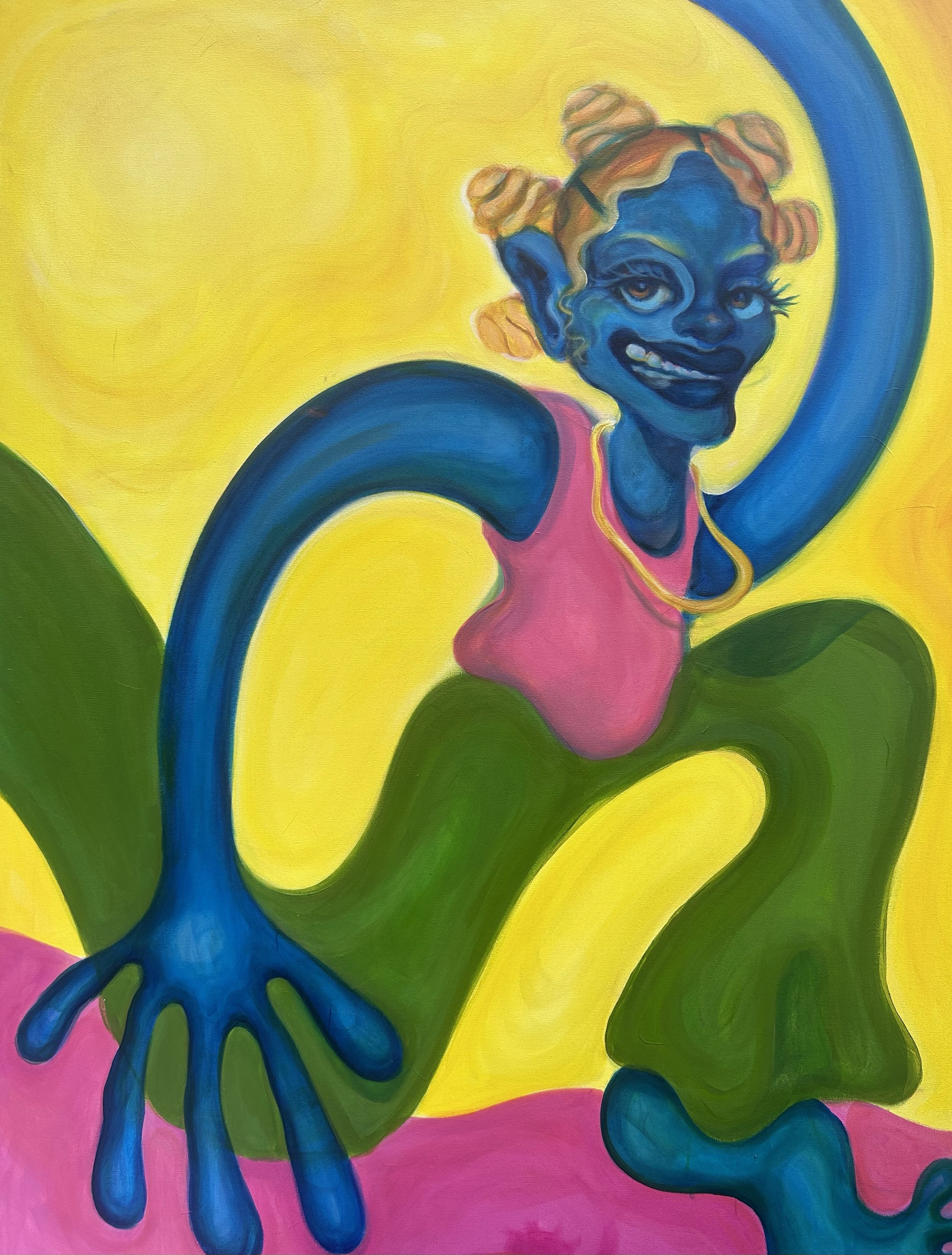
In the complex world we live in, how can one distill the meaning of play? How do we conceptualize the relationship between experimentation and resistance? What is the process for allowing one’s curiosity to emerge so that cognitive liberation is possible? Intrinsic Tool serves as an incubator to address these existential puzzles. Imagined as an interactive experience, the exhibition is not only a collection of artworks, but also an invitation to indulge in the eccentric and a reminder to break away from the simulation of everyday life.
Amidst the adversity inherent to being human, Intrinsic Tool posits that there are innate remedies available to all of us, independent of identity or circumstance. With this underlying posture as its heartbeat, the exhibition attempts to demonstrate that play is an instrument for personal and collective liberation. From dynamic paintings that defy the traditional bounds of canvas to interactive cross-cultural visual tools and otherworldly labyrinth sculptures that push one’s imagination, the featured works further the viewer’s capacity for experiencing and feeling in subtly radical ways.
Curated by D.C. native artist Carter Wynne, this space brings together six creators from varied backgrounds exploring play within their respective practices and ethos. The pieces are meant to be seen, touched, and embodied. They possess an insurgent quality. The artists’ ability to think beyond the limitations of the oppressive forces that govern our society is evidenced through intuitive brushstrokes, saturated world-building, satirical critique, imaginative homage, and investigative landscapes. The exhibition encourages participants to consider any form of play as a political act, a transgressive occurrence. A new visual language is encoded, the senses are disrupted, and our primordial need for experimentation is satiated.
The DC Arts Center’s Curatorial Initiative Presents: Intrinsic Tool
In the complex world we live in, how can one distill the meaning of play? How do we conceptualize the relationship between experimentation and resistance? What is the process for allowing one’s curiosity to emerge so that cognitive liberation is possible? Intrinsic Tool serves as an incubator to address these existential puzzles. Imagined as an interactive experience, the exhibition is not only a collection of artworks, but also an invitation to indulge in the eccentric and a reminder to break away from the simulation of everyday life.
Amidst the adversity inherent to being human, Intrinsic Tool posits that there are innate remedies available to all of us, independent of identity or circumstance. With this underlying posture as its heartbeat, the exhibition attempts to demonstrate that play is an instrument for personal and collective liberation. From dynamic paintings that defy the traditional bounds of canvas to interactive cross-cultural visual tools and otherworldly labyrinth sculptures that push one’s imagination, the featured works further the viewer’s capacity for experiencing and feeling in subtly radical ways.
Curated by D.C. native artist Carter Wynne, this space brings together six creators from varied backgrounds exploring play within their respective practices and ethos. The pieces are meant to be seen, touched, and embodied. They possess an insurgent quality. The artists’ ability to think beyond the limitations of the oppressive forces that govern our society is evidenced through intuitive brushstrokes, saturated world-building, satirical critique, imaginative homage, and investigative landscapes. The exhibition encourages participants to consider any form of play as a political act, a transgressive occurrence. A new visual language is encoded, the senses are disrupted, and our primordial need for experimentation is satiated.